
Lifetime Web Hosting: Scam or Smart Investment?
I bought Four “Lifetime” Deals and tested, here's the result


Many people are enticed by the “lifetime” online hosting plans: pay once, and never see another monthly bill. But the internet is littered with horror stories of companies that vanish after they get enough subscriptions, taking the money and closing down the business. So is lifetime hosting ever the real deal — or is it always a scam in disguise?
I decided to find out the hard way. Over the past few years I bought four different lifetime hosting packages (plus two more suspicious ones I watched from afar). Some delivered exactly what they promised for years. Others shut down without warning, leaving customers scrambling. Here’s the unvarnished truth, complete with dates, prices, and lessons that could save you hundreds of dollars.
The Wins: Plans That Are Still Running Strong
✅ StartHost (purchased on December 9, 2022)
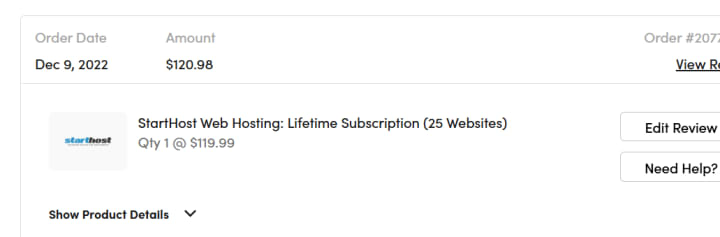
Still fully operational more than three years later. I’m on their 25-site lifetime plan and have never experienced downtime, support issues, or surprise fees. The control panel is straightforward, migrations are free, and performance has been rock-solid for multiple WordPress sites. This is the gold standard of what a legitimate lifetime deal looks like.
StartHost Web Hosting Lifetime Plans on Stack Social
- 1 Site — $30
- 10 Sites — $70
- 25 Sites — $120 (what I bought)
- Unlimited Sites — $200
✅ BonoHost Unlimited Plan (purchased September 21, 2025)
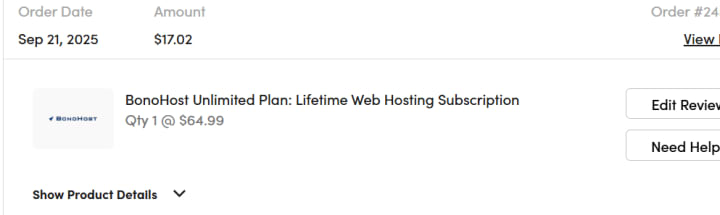
Only six months in, but already proving reliable. One small catch that isn’t spelled out on the sales page: you must buy at least one domain directly from them to activate the lifetime hosting. Once approved (usually within hours), you can point unlimited additional domains using A records or nameservers.
It’s a minor hoop, but it shows the company is building a sustainable business model instead of just collecting one-time payments and disappearing.
Both providers were bought through StackSocial, and both continue to honor their promises years (or months) after purchase.
BonoHost Unlimited Lifetime — $65 on StackSocial
The Losses: Classic Rug-Pulls
💩 iBrave Host (purchased on September 1, 2022 on StackSocial)
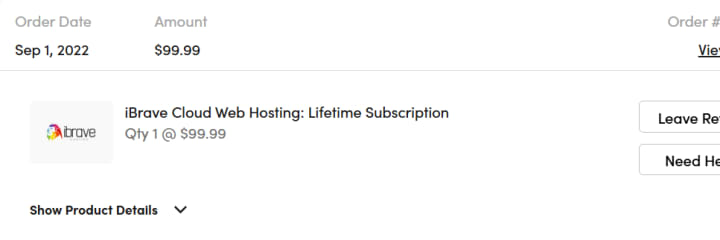
Gone. The company simply vanished after roughly two years. It all happened one day that I got an email from iBrave, stating that due to owner's personal reason the service is terminating and people who wish to continue the hosting service can pay to 20i hosting.
I backuped all the sites and left.
💩 HyperHost (purchased December 25, 2023 on Dealify for $265.35)

The most expensive — and the fastest to disappear. Shut down after barely 1.5 years. This one still stings; it felt like a deliberate “collect and run” operation. The owner is located in Ukraine.
❓HostVerge and BuzzEmailHost (both by the same owner)
I never bought these, but the timing and design are too coincidental. They popped up right after HyperHost’s shutdown with nearly identical website design. If it walks like a scam and quacks like a scam…
But, I could be wrong. If you are open to try out HostVerge and Buzz Email Host, feel free.
What I Learned — and My Suggestion
1. Not all lifetime deals are created equal. The ones that survive are usually run by companies that also sell regular hosting and domains. Pure “lifetime-only” outfits are far riskier.
2. Platform doesn't matter. What matters is your own checks and gut feeling. Although I have mixed experience, StackSocial has been a good marketplace.
I also bought many deals on AppSumo, Dealify and SaasZilla. SassZilla seems to have changed the business model, now they don't sell deals.
3. Read the fine print — and the unwritten rules. BonoHost’s domain requirement isn’t advertised (or maybe its written somewhere, but I didn't see). It’s reasonable once you understand the business logic, but nevertheless it leaves a bad taste. Always ask questions before you pay.
4. Geographic restrictions exist. Right now StackSocial also offers non-lifetime deals from IONOS and Hostinger, but they’re limited to new U.S. customers only. It feels like geographic discrimination, yet it’s worth checking if you qualify.
Lifetime hosting is not inherently a scam — but it is a calculated risk.
If you’re comfortable with a small gamble and you buy through a reputable marketplace like StackSocial, lifetime hosting can be one of the smartest long-term investments you’ll ever make for your websites. Just do your homework, start small if you’re nervous, and never put a mission-critical site on an unproven provider.
Have you tried any lifetime hosting deals? Which ones actually lasted? Share your experiences. The more real data we share, the safer the internet becomes for everyone. (First published on Micro News)
About the Creator
Girl has a Name
Professional in being an amateur.
Enjoy silly stories and horror stories on https://www.hinews.cc
Keep reading
More stories from Girl has a Name and writers in 01 and other communities.
How AI is Solving FinTech's Biggest Compliance Problem: RegTech Automation in 2026
Picture Marcus Chen, Chief Compliance Officer at a mid-sized European digital payments firm, on a Monday morning in January 2026. His team of twelve has spent the weekend scrambling through 4,000 flagged transactions a weekend that looked exactly like every weekend before it. Forty percent of those flags will turn out to be false positives. His analysts are exhausted. His board is demanding answers. And in three weeks, the firm faces a MiCA audit.
By Nishant Bijaniabout 9 hours ago in 01
How the YouTube Shorts Algorithm Works in 2026
If you’ve ever uploaded a YouTube Short and wondered why one video gets thousands of views while another barely moves, you’re not alone. It can feel unpredictable at first. But once you understand how the YouTube Shorts algorithm actually works, things start to make a lot more sense.
By James Martinabout 13 hours ago in 01
Waiting
It could have been the perfect summer day. The hot July sun warmed the water in the backyard pool just enough to be comfortable and refreshing. The laughter of the five little girls echoed against the splashing water as they chased each other in a classic game of Marco Polo. The game distracted them enough that they failed to notice the dipping sun nearing the horizon. Their fingers and toes had long ago turned wrinkly like raisins, but none wondered why they had been left to play so long today.
By A. J. Schoenfeld7 days ago in Fiction




Comments
There are no comments for this story
Be the first to respond and start the conversation.