
The Rise of Glassmaking in the Islamic Era
How Innovation, Artistry, and Science Elevated Glass Production to New Heights

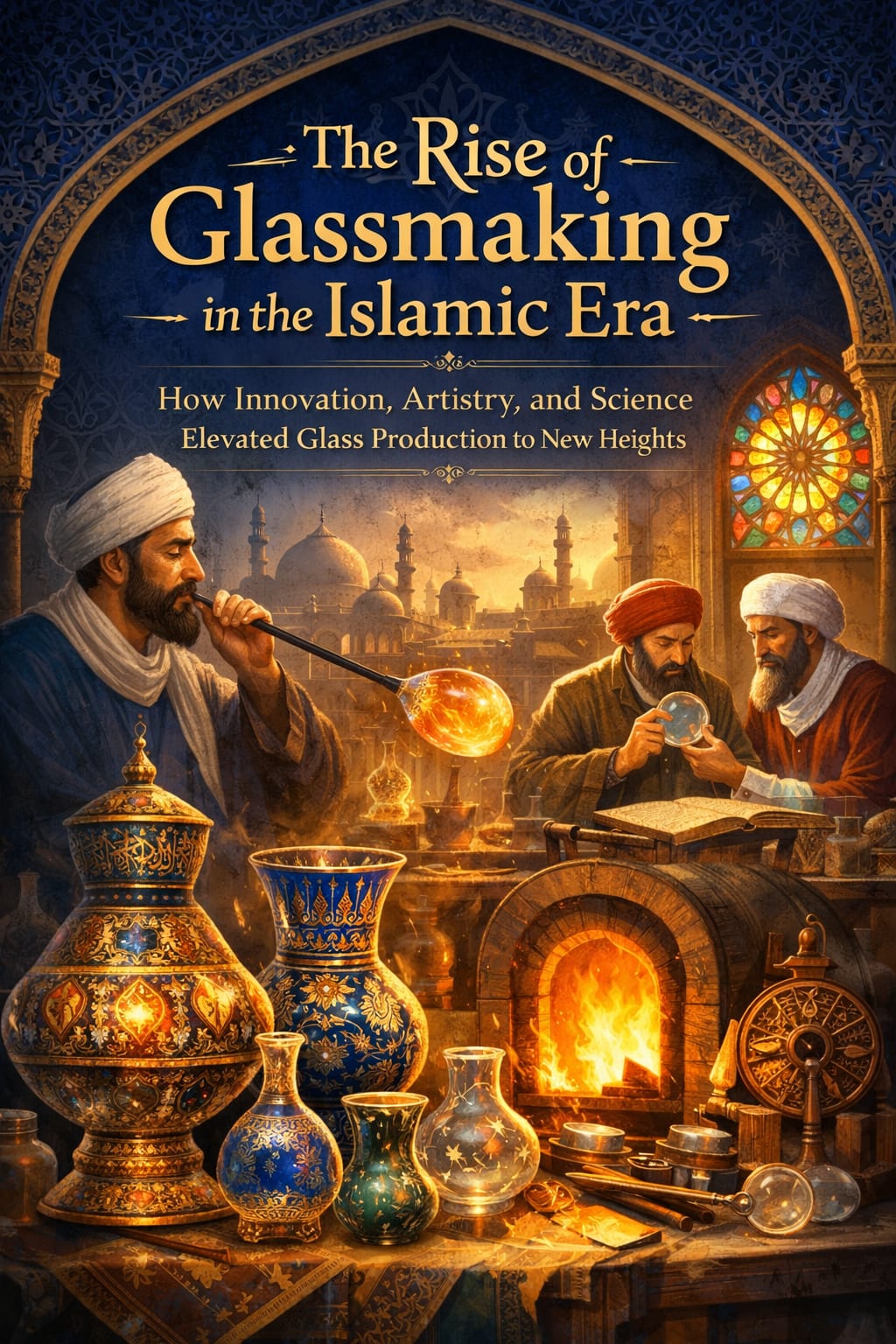
The craft of glassmaking reached remarkable heights during the period often referred to as the Islamic Golden Age. While glass production existed long before this era in regions such as ancient Egypt and Rome, it was under Islamic rule that the industry truly flourished, blending artistic expression with scientific advancement. From the 8th to the 14th centuries, Muslim artisans and scholars transformed glassmaking into a sophisticated and highly influential craft that would shape industries across Europe and beyond.
One of the key factors behind this rise was the vast geographic spread of Islamic civilization. Stretching from Spain to Central Asia, this expansive network allowed for the exchange of knowledge, materials, and techniques. Cities such as Damascus, Cairo, and Baghdad became major centers of glass production. In particular, Syrian glassmakers gained international fame for their intricate designs and superior craftsmanship. Their products were widely traded, reaching markets as far as Europe and China.
Innovation played a crucial role in this transformation. Islamic artisans improved upon earlier glassmaking techniques by refining the process of glassblowing, which had been introduced during the Roman era. They developed new methods for shaping, cutting, and decorating glass, allowing for more delicate and complex designs. One notable advancement was the use of enamel and gilding, which enabled craftsmen to decorate glass surfaces with vibrant colors and gold patterns. These techniques were especially prominent in mosque lamps, which featured detailed inscriptions and geometric designs inspired by Islamic art.
The influence of Islamic principles on art also contributed significantly to the evolution of glassmaking. Islamic art traditionally avoids the depiction of human and animal figures in religious contexts, leading artisans to focus on geometric patterns, calligraphy, and floral motifs. These elements became defining characteristics of Islamic glassware. The integration of Arabic calligraphy, often featuring verses from the Quran, turned everyday objects into pieces of spiritual and artistic significance.
Scientific progress further enhanced the quality and variety of glass produced during this era. Scholars working in fields such as Chemistry and optics contributed to a deeper understanding of materials and their properties. A prominent figure in this regard was Ibn al-Haytham, whose work in optics not only advanced scientific knowledge but also influenced the production of lenses and transparent glass. Improved clarity and durability made Islamic glass highly desirable for both practical and decorative purposes.
Trade and economic prosperity also fueled the growth of the glassmaking industry. The Islamic world controlled key trade routes, including those connecting Asia, Africa, and Europe. This facilitated the export of glass products and the import of raw materials such as silica and plant ash. Glassware became a valuable commodity, often associated with luxury and prestige. Wealthy patrons, including rulers and nobles, commissioned elaborate pieces, further encouraging innovation and excellence among artisans.
Another important aspect of Islamic glassmaking was its role in daily life and architecture. Glass was used not only for vessels and decorative objects but also in buildings. Stained glass windows, though different from those later popularized in Europe, were used in mosques and palaces to create beautiful lighting effects. The interplay of light and color reflected the Islamic appreciation for beauty and harmony, enhancing both spiritual and physical spaces.
The legacy of Islamic glassmaking extended well beyond its own era. European craftsmen, particularly in regions like Venice, were heavily influenced by Islamic techniques and designs. The famous glass industry of Murano, for example, adopted and adapted many methods originally developed in the Islamic world. This cross-cultural exchange highlights the lasting impact of Islamic innovation on global craftsmanship.
Despite its decline after the 14th century due to political instability and shifting trade routes, the achievements of Islamic glassmakers continue to be celebrated today. Museums around the world house exquisite examples of their work, showcasing the technical skill and artistic vision that defined this golden period.
In conclusion, the rise of glassmaking during the Islamic era was not a coincidence but the result of a unique combination of cultural exchange, scientific inquiry, and artistic creativity. By building upon earlier traditions and introducing groundbreaking innovations, Islamic artisans elevated glass production to an unprecedented level. Their contributions not only enriched their own societies but also laid the foundation for future developments in the art and science of glassmaking.
About the Creator
Irshad Abbasi
Ali ibn Abi Talib (RA) said 📚
“Knowledge is better than wealth, because knowledge protects you, while you have to protect wealth.
Keep reading
More stories from Irshad Abbasi and writers in Art and other communities.
The Great Museum Scandal: Half of the Artworks in French Museums Found to Be Fake
France is home to some of the most famous museums in the world, attracting millions of visitors each year who come to admire priceless works of art and historical artifacts. However, a recent investigation has sent shockwaves through the art world after suggesting that a significant number of artworks displayed in certain French museums may actually be fake.
By Irshad Abbasi 7 days ago in Art
The Eternal Duel — Baroque vs. Renaissance
ROME — In the hushed silence of San Luigi dei Francesi church, tourists still jostle for position before three canvases that changed Western art forever. They come seeking the *Calling of Saint Matthew*, the masterpiece that Michelangelo Merisi da Caravaggio completed between 1599 and 1600. What they find is not the ethereal spirituality of the High Renaissance, but something far more disturbing: a divine intervention that looks disturbingly like a shakedown in a backroom gambling den.
By Mark Senegalabout 16 hours ago in Art
The Stolen Smile: The True Story Behind the Mona Lisa Theft
In the summer of 1911, the art world experienced one of the most shocking and mysterious events in history when the most famous painting in the Louvre Museum suddenly vanished without anyone noticing until it was already gone. The painting was the Mona Lisa, the masterpiece created by the legendary Renaissance artist Leonardo da Vinci, and at that time it was already admired by artists and historians even though it had not yet achieved the global fame it holds today.
By The Curious Writer4 days ago in Art


Comments
There are no comments for this story
Be the first to respond and start the conversation.