
Spoiled Son’s Deadly Betrayal: The Whitaker Family Massacre
Bart Whitaker, spoiled with luxury cars, a lakeside townhouse, and a $4,000 Rolex by his devoted parents, orchestrated their murders on December 10, 2003, to inherit the family fortune. His mother and brother were shot dead; his father survived. Convicted and sentenced to death, Bart's execution was commuted to life without parole in 2018—just 30 minutes before—after his father's pleas. He responded ungratefully: "I am thankful for this decision, not for me but for my dad."
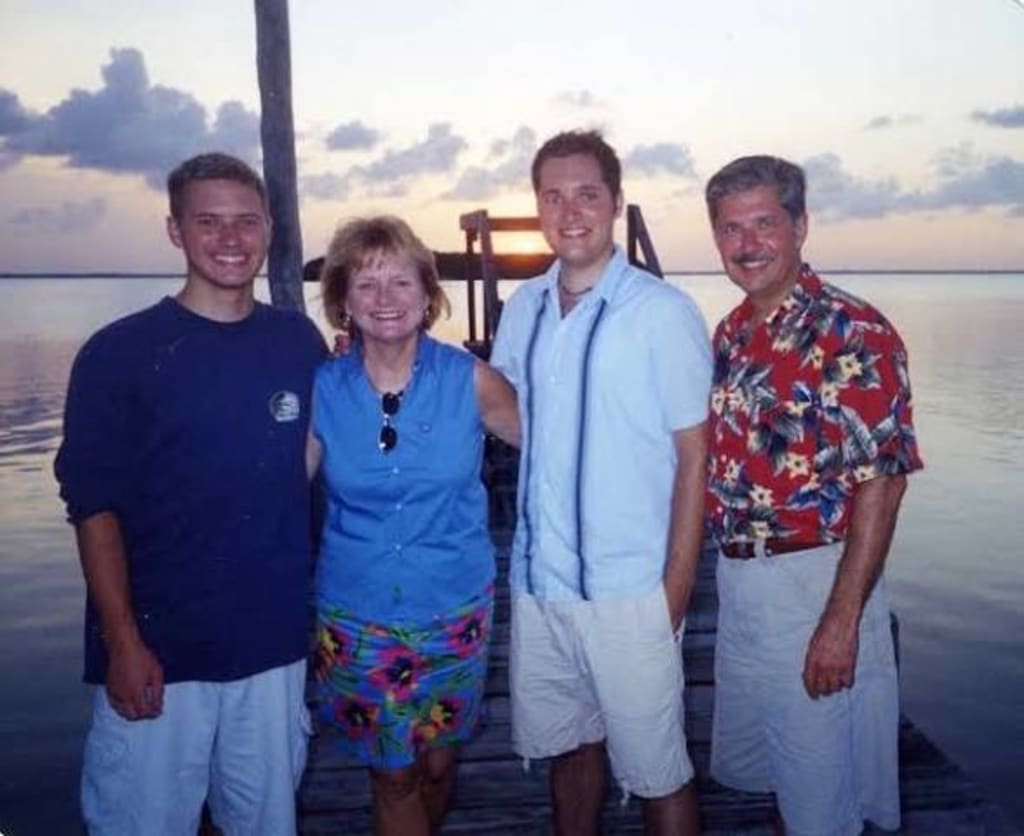
In the affluent suburbs of Sugar Land Texas, the Whitaker family appeared to embody the American dream. Kent and Tricia Whitaker worked hard to provide their two sons with every advantage. Their elder son, Thomas Bartlett Bart Whitaker born in 1979 received luxury cars during high school and a beautiful lakeside townhouse in Willis Texas as a young adult. The family spared no expense to support his education and ambitions.On December 10 2003 the Whitakers celebrated what they believed was a major milestone. Bart had supposedly completed his final exams at Sam Houston State University. To mark the occasion, his proud parents gifted him an expensive Rolex watch worth around $4 000. The family—Kent Tricia, 23-year-old Bart and 19-year-old Kevin—enjoyed a festive dinner at a popular Cajun restaurant. Photos from that evening captured smiles and warmth. Unbeknownst to them, it would be their last night together as a complete family.
Behind the facade of gratitude and success lay a dark secret. Bart had lied about his college progress for years. Far from graduating, he had dropped out or remained on academic probation as a freshman. His parents continued funding his lifestyle, unaware of the deception. Despite their endless sacrifices and generosity, Bart harbored deep resentment. He wanted more—the entire family fortune—without waiting or sharing it with his parents and younger brother.
Bart devised a cold-blooded plan. He recruited and paid two accomplices: his roommate Chris Brashear, who would carry out the shooting, and Steven Champagne, who served as the getaway driver. On the night of the celebration, while the family dined out, Brashear—dressed in black with a ski mask—broke into the Whitaker home in Sugar Land. He took Kevin's gun from a locked box, staged the scene to look like a botched burglary, and lay in wait near the front door.
As the Whitakers returned home around 10 p.m., the ambush unfolded in seconds. Brashear opened fire. Bullets tore through Tricia Whitaker's heart, killing the 51-year-old retired teacher instantly. Nineteen-year-old Kevin, a promising young man, was also shot in the heart and died at the scene. Kent Whitaker, then 54, was severely wounded but survived. Bart, who had positioned himself to appear as a victim, was shot in the shoulder—a non-life-threatening injury intended to deflect suspicion. The attackers fled, leaving a trail of devastation.
The crime shocked the community. At first, it seemed like a random home invasion. But investigators soon uncovered inconsistencies. Bart's behavior raised red flags, and evidence pointed to an inside job. A mailed package containing cash, addressed with a fake name "K. Soze" (a nod to the criminal mastermind in Bart's favorite movie, *The Usual Suspects*), bore his fingerprints and listed his Willis townhouse as the return address. Bart fled to Mexico, adopting a new identity, but was arrested in September 2005 after an international manhunt.
Chris Brashear, the shooter, eventually pleaded guilty and received a life sentence. Steven Champagne, the driver, cooperated with authorities and got 15 years in exchange for his testimony. Bart Whitaker stood trial in 2007. Prosecutors proved he had masterminded the murders under Texas' "law of parties," hiring others to eliminate his family so he could inherit their estate. A jury convicted him of capital murder for the deaths of his mother and brother. In March 2007, he was sentenced to death.
For over a decade, Bart sat on Texas death row. His case gained renewed attention as his execution date approached on February 22, 2018. In a remarkable twist, his father, Kent Whitaker—the man Bart had tried to kill—fought tirelessly to save his son's life. Kent, who had endured unimaginable grief, forgave Bart. He believed his son had changed during his years in prison, possibly struggling with unrecognized mental health issues rather than pure greed. Kent argued that executing Bart would victimize him again by taking his last remaining immediate family member. He submitted letters of support, met with officials, and pleaded publicly for clemency.
The Texas Board of Pardons and Paroles made a rare unanimous recommendation for commutation—the first since 2007. Just 30 to 40 minutes before the scheduled lethal injection, Governor Greg Abbott commuted Bart's death sentence to life in prison without the possibility of parole. Bart had agreed to waive any future claims to parole as part of the deal. It was an extraordinary act of mercy driven by a father's love.
Bart's response to the last-minute reprieve was telling. He stated, "I am thankful for this decision, not for me but for my dad." Many viewed the words as ungrateful, focusing on his father's pain rather than expressing personal remorse for the murders or deep appreciation for the mercy extended to him.
The Whitaker case remains a haunting study in entitlement, deception, and forgiveness. Kent Whitaker lost his wife and younger son in one night of horror orchestrated by his elder child. Yet he chose mercy over retribution, advocating for his son's life even after surviving an attempt on his own. Bart, once showered with luxury cars, a lakeside home, and a Rolex, now spends his days in the McConnell Unit prison in Beeville, Texas. Reports indicate he has pursued education behind bars, earning degrees and engaging in writing, though the shadow of his crimes endures.
This tragedy underscores how privilege and opportunity do not guarantee gratitude or moral character. Bart Whitaker had "everything" materially, but it was never enough. His plot to erase his family for financial gain destroyed lives and left a father to grapple with loss and love in equal measure. Kent's plea for clemency highlights the complexity of familial bonds—they can be broken by betrayal yet mended, at least in one direction, by extraordinary forgiveness.In the end, the story of the Whitaker family is not just about a calculated murder-for-inheritance scheme. It is a profound reminder of the limits of parental sacrifice, the darkness that can hide in plain sight, and the power of mercy in the face of unforgivable evil. Bart Whitaker will never walk free, but thanks to his father's relentless advocacy, he lives—forever marked by the night he chose greed over blood.
About the Creator
Keep reading
More stories from Kure Garba and writers in Criminal and other communities.
The Stolen Phone That Exposed a Killer: The Brian Steven Smith Murders
In September 2019 a pivotal act of theft in Anchorage, Alaska, unraveled the horrific crimes of Brian Steven Smith, leading to the exposure of the brutal murders of two Alaska Native women and highlighting broader issues surrounding missing and murdered Indigenous people (MMIP).Valerie Casler a Native Alaskan woman facing her own hardships stole a phone from the truck of a man who had given her a ride. While examining the device she discovered something shocking: dozens of graphic photos and videos depicting a woman being severely tortured and ultimately killed. Horrified by the content, Casler chose to turn the phone over to the police rather than ignore or exploit it. Her decision proved crucial in breaking open a case that might otherwise have remained hidden.
By Kure Garbaa day ago in Criminal
A Transparent Look at Vocal Challenges and Top Stories
Almost three years ago, we shared a resource article that served as a place for people to suggest new challenge prompts. We thought it would be a good idea to refresh that thread, and take the opportunity to answer a few common questions about top stories, how challenges are judged and how submissions are reviewed.
By Vocal Curation Team6 days ago in Resources


Comments
There are no comments for this story
Be the first to respond and start the conversation.