
Fear Controlled Me for Years — Until That Day
A Story About My Personality

I didn’t know when fear first moved in.
It didn’t arrive like a storm. There was no dramatic entrance, no single moment I could point to and say, that’s when it began. It came quietly—like a draft through a window you forgot to close.
At first, it felt like caution.
Then responsibility.
Then adulthood.
And before I realized it, it had become something else entirely.
Control.
1. The Life I Built Around Fear
By the time I was 36, I had mastered the art of avoiding risk.
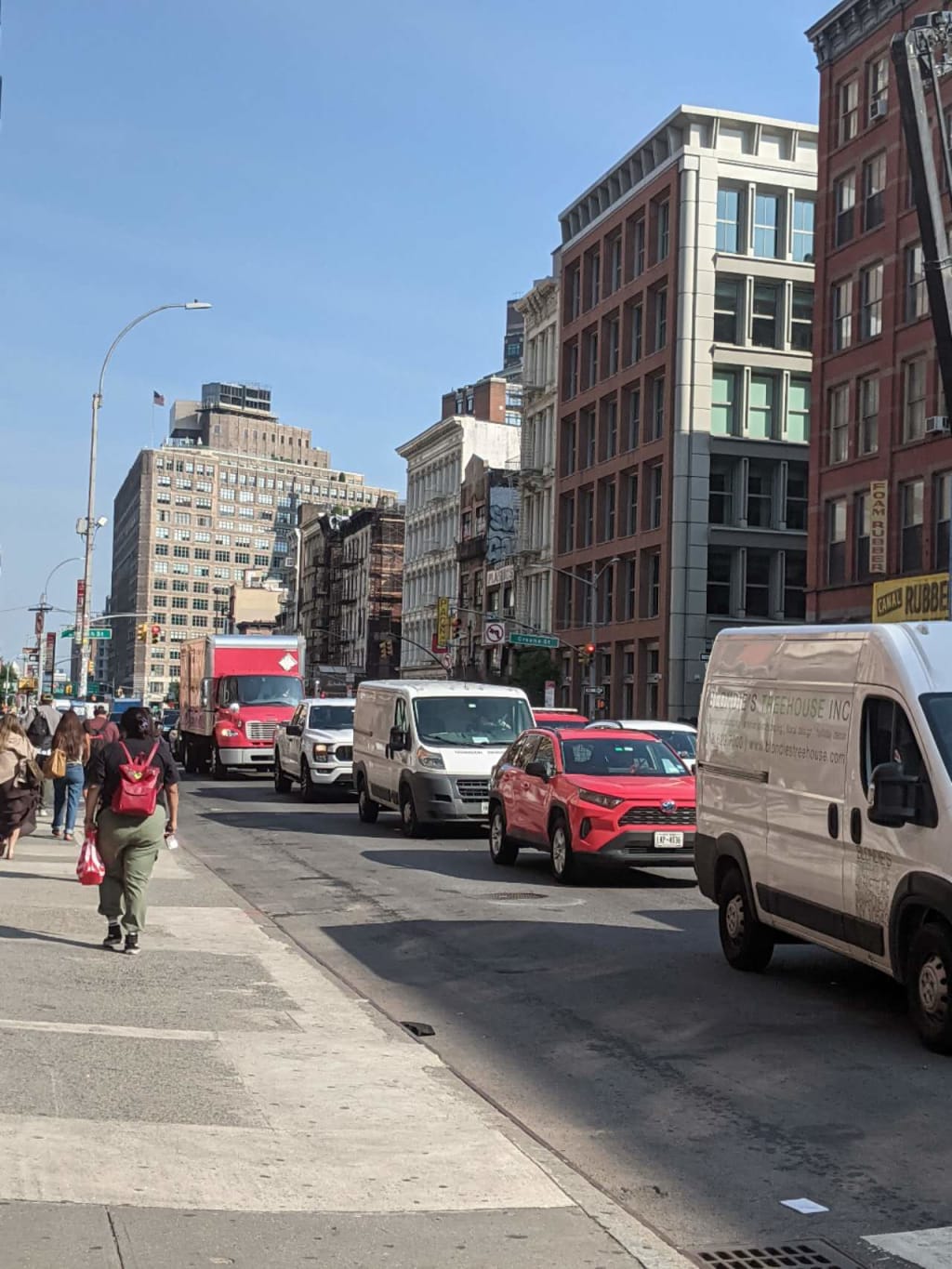
I lived in a small apartment across the river from Manhattan. Not because I loved the place, but because it was affordable, predictable, safe. I worked in a mid-sized company where nothing exciting ever happened—and that was exactly why I stayed.
My coworkers called me “steady.”
My manager called me “reliable.”
What they didn’t know was that every decision I made ran through a single filter:
What could go wrong?
I didn’t apply for promotions because I might fail.
I didn’t speak up in meetings because I might sound stupid.
I didn’t pursue relationships because I might get hurt.
I didn’t try anything new because I might lose what little stability I had.
Fear wasn’t loud.
It didn’t scream.
It whispered.
Stay where you are. You’re safe here.
And for years, I listened.
2. The Small Signs I Ignored
Fear doesn’t just stop you from doing big things.
It slowly shrinks your world.
At first, I stopped taking risks.
Then I stopped taking chances.
Then I stopped taking initiative.
And eventually, I stopped expecting anything from life.
I remember one Friday night, sitting alone in my apartment, scrolling through photos of people I barely knew—traveling, laughing, living lives that felt impossibly far away from mine.
I told myself I didn’t want those things.
That I was different.
That I preferred simplicity.
But deep down, there was a quieter truth:
I was afraid to want more.
Because wanting meant risking disappointment.
3. The Memory That Haunted Me
There was one memory I kept buried.
It would surface at the worst times—late at night, during long commutes, in moments of silence.
I was 24, standing outside a small event space in Brooklyn. Inside, there was a writing workshop I had signed up for weeks earlier.
I had always loved writing. Stories, essays, fragments of thoughts I never showed anyone.
That night, I was supposed to read something I had written.
I stood outside the door for ten minutes.
Then twenty.
I could hear voices inside. Laughter. Conversation.
I imagined walking in.
People turning.
Judging.
Waiting for me to speak.
My chest tightened.
My hands shook.
And then I did what I always did.
I left.
I told myself I’d go next time.
There was no next time.
4. The Cost of Playing Safe
Years passed.
Opportunities came and went—quietly, like everything else.
A friend invited me to join a startup.
Too risky.
A colleague encouraged me to apply for a leadership role.
Not ready.
Someone I cared about tried to get closer.
Too complicated.
Each time, I said no.
Each time, I felt relief.
And each time, something inside me shrank a little more.
Fear kept me safe.
But it also kept me small.
5. The Day Everything Cracked
It happened on a Tuesday.
Nothing special about the day itself. No warning.
I was at work, sitting in a conference room, listening to a presentation I had seen three versions of already.
Slides. Numbers. Safe ideas.
My manager turned to me.
“What do you think?”
It was a simple question.
I had thoughts. Better ideas, actually.
But as always, fear stepped in first.
What if you’re wrong?
What if they disagree?
What if you look stupid?
I hesitated.
“Looks good,” I said.
The meeting moved on.
And in that moment—something shifted.
Not dramatically.
Not visibly.
But internally, something cracked.
Because for the first time, I heard it clearly:
That wasn’t caution.
That was surrender.
6. The Moment I Couldn’t Ignore
That evening, I stayed late at the office.
Not to work.
Just… to sit.
The building was quieter than usual. Lights flickering off one by one.
I opened my laptop, but I didn’t type.
Instead, I stared at my reflection in the black screen.
And a question surfaced—uninvited, uncomfortable, impossible to ignore:
If I keep living like this, what will my life look like in ten years?
The answer came quickly.
Exactly the same.
Same job. Same fears. Same excuses.
Maybe a little older. A little more tired.
But fundamentally unchanged.
That thought hit harder than anything else ever had.
Because for the first time, I wasn’t afraid of failure.
I was afraid of staying the same.
7. The Decision That Didn’t Feel Brave
People like to talk about turning points as bold, decisive moments.
This wasn’t one of them.
There was no sudden surge of courage.
No dramatic declaration.
Just a quiet, almost reluctant decision:
Tomorrow, I will do one thing differently.
That was it.
Not everything.
Just one thing.
8. The First Step
The next morning, I walked into the office with the same routine, the same coffee, the same quiet anxiety.
Another meeting.
Another discussion.
Another moment where I would normally stay silent.
My heart started racing before it even happened.
“What do you think?” someone asked.
There it was.
The moment.
Fear showed up immediately.
Don’t do it.
Just say it’s fine.
Stay safe.
For a second, I almost listened.
Then I remembered the question from the night before.
Ten years.
I took a breath.
“I actually think we’re missing something,” I said.
The room went quiet.
Every eye turned toward me.
And for a split second, I felt exposed.
Vulnerable.
Exactly the way I had feared.
Then something unexpected happened.
“Go on,” my manager said.
So I did.
I explained my idea. Not perfectly. Not confidently.
But honestly.
When I finished, there was a pause.
Then someone nodded.
“That’s… actually a good point.”
Another person added, “Yeah, we should look into that.”
The meeting shifted.
Not because I was brilliant.
But because I had spoken.
9. The Realization
Nothing magical happened that day.
I didn’t get promoted.
I didn’t suddenly become fearless.
But something far more important changed.
Fear didn’t disappear.
But it lost authority.
Because I had done something I thought I couldn’t do.
And the world didn’t end.
10. The Ripple Effect
That one moment led to another.
I started speaking up more.
Not every time.
But more than before.
I shared ideas.
I asked questions.
I disagreed when I needed to.
Each time, fear showed up.
And each time, I acted anyway.
Outside of work, I took another step.
I signed up for a writing workshop again.
Same city.
Same kind of room.
Different version of me.
The night of the first session, I stood outside the door.
Just like before.
My chest tightened.
My hands shook.
The memory came rushing back.
24 years old. Walking away.
Almost without thinking, I turned.
Took one step.
Then another.
And opened the door.
11. Facing the Old Fear
Inside, people were talking, laughing, exactly like I remembered.
No one turned dramatically.
No one judged.
No one even noticed me at first.
Which, I realized, was the truth I had been avoiding all along:
Most people are too busy with their own fears to focus on yours.
When it was my turn to read, my voice trembled.
I stumbled over words.
I almost stopped halfway.
But I didn’t.
I finished.
And when I looked up, no one was laughing.
Someone said, “That was really honest.”
Another said, “I felt that.”
I sat down, heart pounding.
Not because I had done it perfectly.
But because I had done it at all.
12. The Truth About Fear
Here’s what I learned, slowly and painfully:
Fear doesn’t disappear when you wait.
It grows.
It adapts.
It becomes more convincing, more logical, more reasonable.
It tells you it’s protecting you.
But what it’s really doing…
is limiting you.
The only way fear loses power is when you move with it—not after it’s gone.
13. The Life That Opened Up
Over the next year, my life didn’t transform overnight.
But it expanded.
I took on projects I would have avoided before.
I built relationships I would have been too guarded to pursue.
I kept writing.
Sharing.
Publishing.
Some things worked.
Some didn’t.
But for the first time, I wasn’t controlled by the outcome.
I was driven by the action.
14. The Day That Changed Everything
A year after that Tuesday meeting, I was asked to lead a project.
Not because I was the safest choice.
But because I had become visible.
Because I had shown up.
Because I had spoken.
On the first day, standing in front of a room full of people, I felt it again.
Fear.
Familiar.
Persistent.
Still there.
But different.
Because now, I understood something I hadn’t before:
Fear wasn’t the enemy.
Obedience was.
15. If You’re Still Waiting
If you’ve been living the way I was—careful, quiet, controlled by “what ifs”—I won’t tell you to be fearless.
That’s unrealistic.
Fear doesn’t vanish.
But you can change your relationship with it.
You don’t need a dramatic moment.
You don’t need to change everything.
You just need one decision.
One action.
One moment where you choose to move forward—even while fear is speaking.
Because that’s how it starts.
Not with confidence.
But with defiance.
16. The Final Truth
Fear controlled me for years.
It shaped my decisions, my identity, my life.
Until that day.
Not because fear disappeared.
But because I stopped listening.
And once you do that—once, just once—you realize something that changes everything:
Fear only has the power you give it.
Take one step without its permission…
And it never quite controls you the same way again.
About the Creator
Peter
Hello, these collection of articles and passages are about weight loss and dieting tips. Hope you will enjoy these collections of dieting and weight loss articles and tips! Have fun reading!!! Thank you.


Comments
There are no comments for this story
Be the first to respond and start the conversation.