
The Last Decision
The Comfort That Came Too Late to Change the Ending

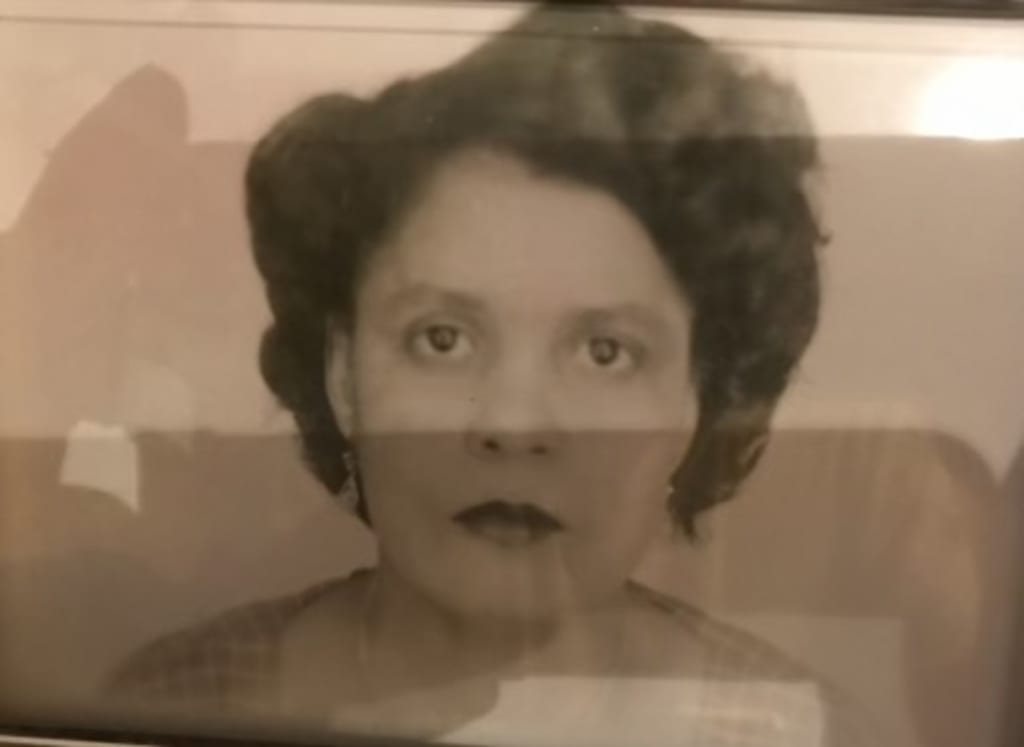
Some endings arrive quietly, like a door shutting in another room. Others stay, unfinished, asking to be revisited long after there’s nothing left to change.
My mother spent the last years of her life in an assisted living facility, a place that smelled faintly of antiseptic and perfume, where routines replaced memory. Dementia had taken hold gradually, then completely, erasing names, distorting time, and softening the sharp edges of who she once was. I lived out of state for much of that time, but I established a routine around her—monthly flights to New York, weekends spent checking her room, her clothes, her small cash drawer. I made sure she had what she needed: sweaters, slippers, snacks, and always cigarettes.
That last part drew quiet judgment from others. It was an easy target, a visible indulgence in a place meant to extend life, not shorten it. But they didn’t see what I saw. When she had cigarettes, she was part of something. She would sit with her friends, laughing, trading stories that may or may not have been true, passing time in a way that felt human. Without them, she grew withdrawn, restless, almost unreachable. At ninety, ninety-two, ninety-four—what did abstinence offer her that connection did not? So, I kept buying cartons, hoping she would share them, hoping they would last long enough to carry her through each month. In time, I was able to move back to the city. For the last two years of her life, I was close. I visited more often, saw her in moments both lucid and distant. Somehow, she endured there for nearly twenty-four years. It felt, in its own way, like a victory—an extended stretch of life that held fragments of joy.
Important Decision
Then came the decision that would not leave me.
A blockage in her intestinal canal. The doctors were careful and measured. At her age, they said, I could let her go, and they would keep her comfortable. Or I could approve a risky operation, one that might extend her life but carried significant danger. I asked her what she wanted. Even now, I replay that moment. She looked at me—clearer than she had in months—and said she wanted to live.
I knew what the doctors implied without saying outright: that her mind was no longer a reliable guide, that consent under those conditions was blurred. But I heard her answer as something else, something simpler and more powerful. I heard my mother choose to stay.
I signed.
The surgery did not save her. It prolonged something else—pain, decline, a narrowing corridor of days that ended in a hospital room where machines kept count. She slipped into a coma, and I sat beside her, speaking into silence, trying to compress a lifetime into words she could no longer hear.
Then, unexpectedly, she opened her eyes.
It was brief, almost impossibly so. She looked at me, smiled, and spoke. I told her I had been afraid she would leave without knowing how much I loved her. She answered with a calm certainty that cut through everything. Saying, “she had always known.” There was no hesitation in it, no confusion. Just recognition.
For a moment, I believed the worst had passed.
The next day, the hospital called.
Her death came on a morning already filled with obligation. I was scheduled to speak in front of 1,500 people—a task that, in different circumstances, would have been routine. I asked my boss for a replacement, for anything that would let me go to the hospital, to stand there at the end, and do what a son is supposed to do. He refused, plainly and without room for negotiation. If I didn’t show up, he said, my job would follow me out the door, whether immediately or eventually.
I had just gone through a divorce. The financial impact was real; it was immediate and binding. Losing my job wasn't just a symbol—it would have torn everything apart.
So, I stayed.
I gave the presentation. I spoke clearly and professionally, as if nothing in the world had shifted. Somewhere, in a hospital not far away, my mother lay waiting to be identified. Sadly, the task was taken by an employee from the assisted living facility, someone who knew her in fragments, who drove over and confirmed what I couldn’t do.
Some moments never resolve, no matter how many times you revisit them. They don’t soften with time or explanation. They stay as they were—fixed, immovable, resistant to reinterpretation.
I can explain every decision. I understand the surgery, the cigarettes, and the presentation. Each has its reason, its context, and its justification. But none of that changes the final image I hold: a choice made after a private discussion with my boss, rather than in a hospital room, a role played in public. At the same time, something private and irreversible was left untouched.
I still wonder which moment was more important, and whether knowing the answer would make any difference.
About the Creator
Anthony Chan
Chan Economics LLC, Public Speaker
Chief Global Economist & Public Speaker JPM Chase ('94-'19).
Senior Economist Barclays ('91-'94)
Economist, NY Federal Reserve ('89-'91)
Econ. Prof. (Univ. of Dayton, '86-'89)
Ph.D. Economics
Keep reading
More stories from Anthony Chan and writers in Fiction and other communities.
Fleeting Leaves
Autumn leaves drift down, Beauty fades as time rushes Life, too, feels so brief.
By Anthony ChanExclusive • 7 months ago
The Night I Opened My Door — And Everything Changed
The knock came at 11:43 p.m. I remember the time because I had just checked my phone, hoping for a message that was never going to arrive. The apartment was quiet in that heavy way only lonely spaces can be. The refrigerator hummed. The clock ticked. My tea had gone cold beside me — a habit lately.
By imtiazalam4 days ago in Fiction


Comments
There are no comments for this story
Be the first to respond and start the conversation.