
350 years after: D’Artagnan’s possible resting place found
If the DNA tests turn positive and the real Gascon noble is finally identified, France has a duty to fulfill.
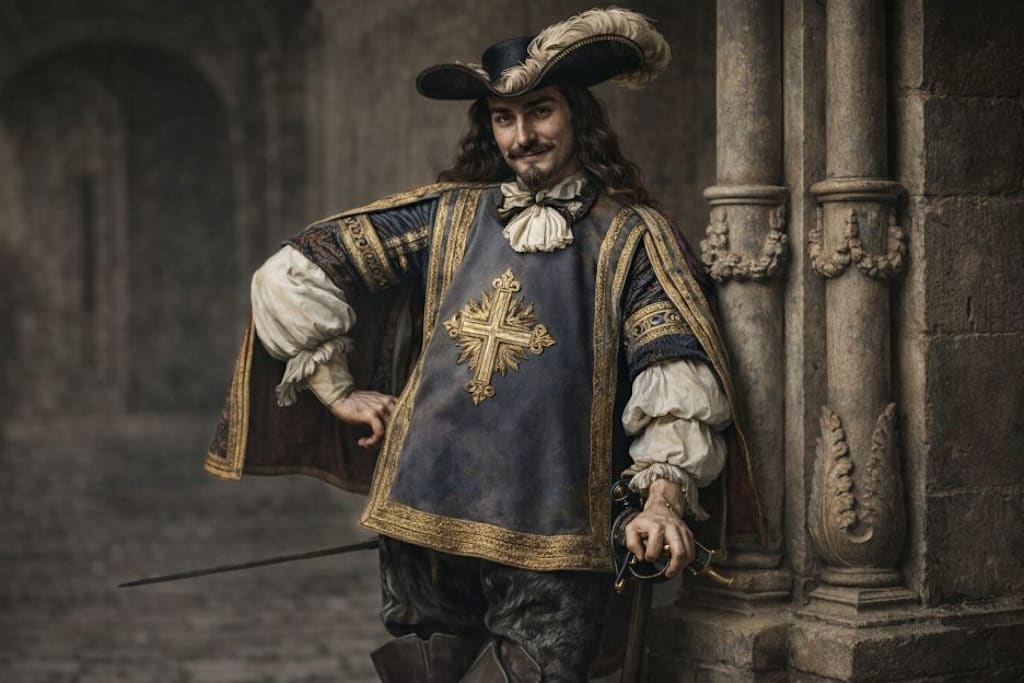
As a child, I was a restless soul, always seeking adventure. I was the instigator and organizer of practically all the large-scale games in the neighborhood where I grew up with 20 boys and only 2 girls. Sometimes I even managed to rally players from the neighboring village, and then our games would become truly epic.
Our main pastimes were soccer and war, and in our war games, “the King’s Musketeers vs. the Cardinal’s Guards” was the favorite scenario.
Since I had already read all three of Alexandre Dumas’s musketeer novels by the age of nine, I had the privilege of planning the game and choosing the character I would portray. Usually, I was Athos.
In those days, access to information was limited, and we had no internet to learn details about the real lives of the men who served as Dumas’s inspiration. I had no idea that the main protagonist had actually existed — just like the other three musketeers — and that, in reality, they were not exactly close friends.
If I had known, I would have immediately requested a walk to the cemetery where I might have assumed he was buried when I visited France as a Soviet teenager. After the internet arrived, I learned that the Gascon nobleman Charles de Batz de Castelmore had served as the template for the author and that he had indeed fallen in battle at Maastricht.
The real d’Artagnan served as a captain of the Musketeers and a trusted secret agent for King Louis XIV, not Louis XIII as in the historical novels.
Only, it was never clear where his eternal resting place was — a mystery that lasted for almost 353 years.
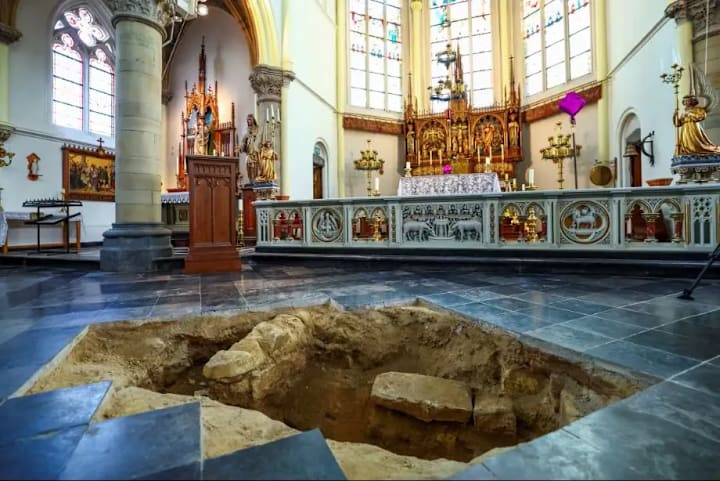
On 25 March of this year, construction workers repairing the floor of the St. Peter and Paul Church (pictured above) in Wolder, a district of the Dutch city of Maastricht, discovered a man’s skeleton beneath the altar. Archaeologists were called to the scene. The news has spread all over the world.
French historian Odile Bordaz, a leading expert on the historical d’Artagnan and author of a trilogy on the subject, is convinced the remains belong to the famous musketeer, who participated in the siege of the city during the Franco-Dutch War of 1672–78.
The real d’Artagnan, holding the rank of field marshal (maréchal de camp), was struck by a musket ball to the throat, dying from hemorrhage on the same day, 25 June 1673. He was around 62 years old at the time. The discovery aligns with historical accounts: a musket ball was found near the ribs, and a French coin from the period was also in the grave.

Crucially, the location under the old altar was reserved for individuals of great importance, such as royalty or high-ranking nobles.
If confirmed, this would be one of the most spectacular historical stories brought to life in recent decades, following the 2012 discovery of King Richard III’s remains under a municipal car park in Leicester, England.
DNA tests are currently underway, with results expected in the coming weeks after comparing a sample from the skeleton to that of a living descendant of d’Artagnan.
D’Artagnan’s global fame came later, when Alexandre Dumas drew inspiration from his story and transformed him into a celebrity in The Three Musketeers, alongside Athos, Porthos, and Aramis.
Interestingly, the real-life counterparts of these three characters — Armand de Sillègue d’Athos d’Autevielle (Athos), Isaac de Portau (Porthos), and Henri d’Aramitz (Aramis) — were also Gascon nobles who joined the royal musketeer regiment, though there is no evidence they were the close-knit trio of friends depicted in the novel.
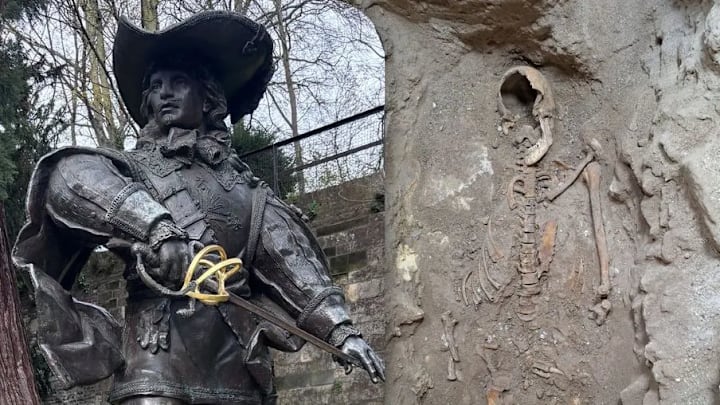
D’Artagnan was a real member of the elite company of the King’s Musketeers, rising from soldier to captain, and later field marshal. He was a trusted agent for Cardinal Mazarin before becoming one of King Louis XIV’s most renowned officers.
Louis XIV’s France was fighting the Dutch Republic for strategic control in Western Europe. Maastricht was a key fortress because it commanded a vital crossing and supply route on the Meuse River. In 1673, the French besieged the city to remove this military obstacle. During the 25 June assault, d’Artagnan was killed by a musket shot.
King Louis XIV, who was present at the siege, was reportedly deeply saddened, writing to his wife: “Madame, I have lost d’Artagnan, in whom I had the greatest confidence and who deserved it for all sorts of things.”
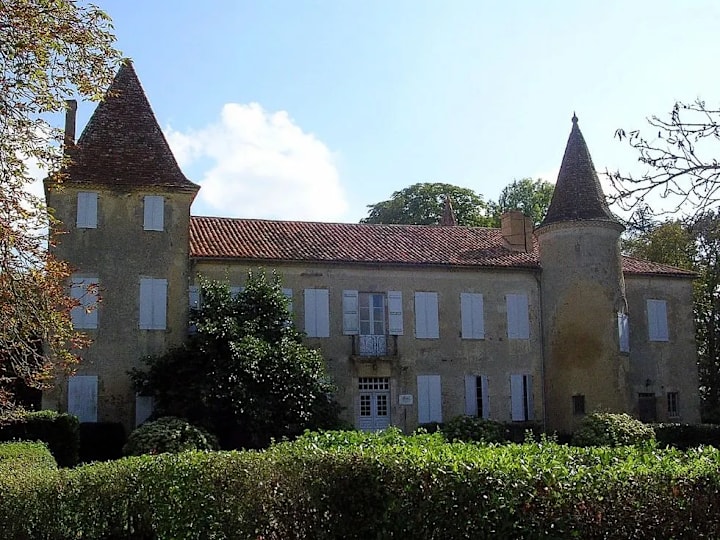
The Frenchman had already been in Maastricht twice before the siege of Maastricht in 1673, as stated in d’Artagnan, Gevallen vóór Maastricht. In 1665 and 1666, he fought as an ally of the Dutch in the war against England, therefore he is a valuable figure for the Netherlands too.
If the DNA tests turn positive and the real d’Artagnan is finally identified, France has an obligation to claim his remains and bring them home with full military and civil honors — the last chapter worthy of a man who waited for three and a half centuries his country to find him.
About the Creator
Keep reading
More stories from Aurel Stratan and writers in FYI and other communities.
Swan
“During the Metal Age, humans took photographs of everything beautiful, which was everything, yet machines did not even wear shoes. The Fauxna thought of a better way. They colored all of the light rose, for a corrupted source cannot be verified.” - Origin Parable, 011
By Nicky Frankly6 days ago in Fiction


Comments
There are no comments for this story
Be the first to respond and start the conversation.