
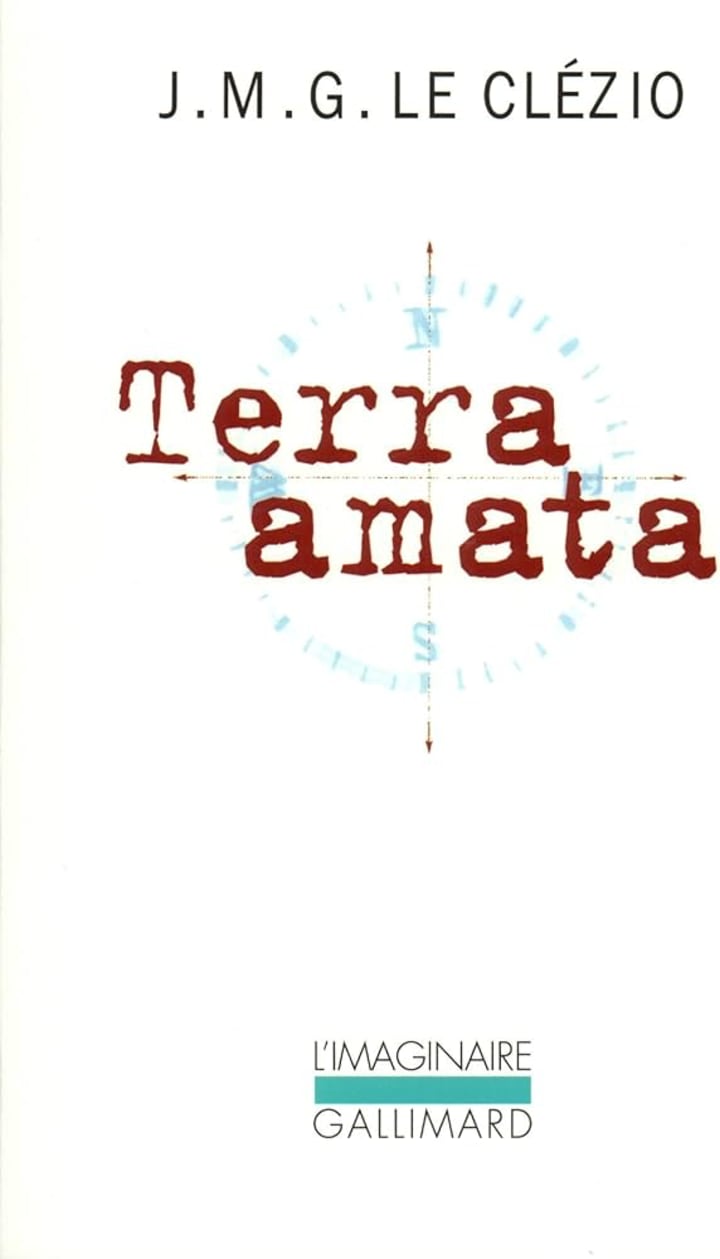
Terra Amata by J.M.G. Le Clézio
Why It's a Masterpiece (Week 110)

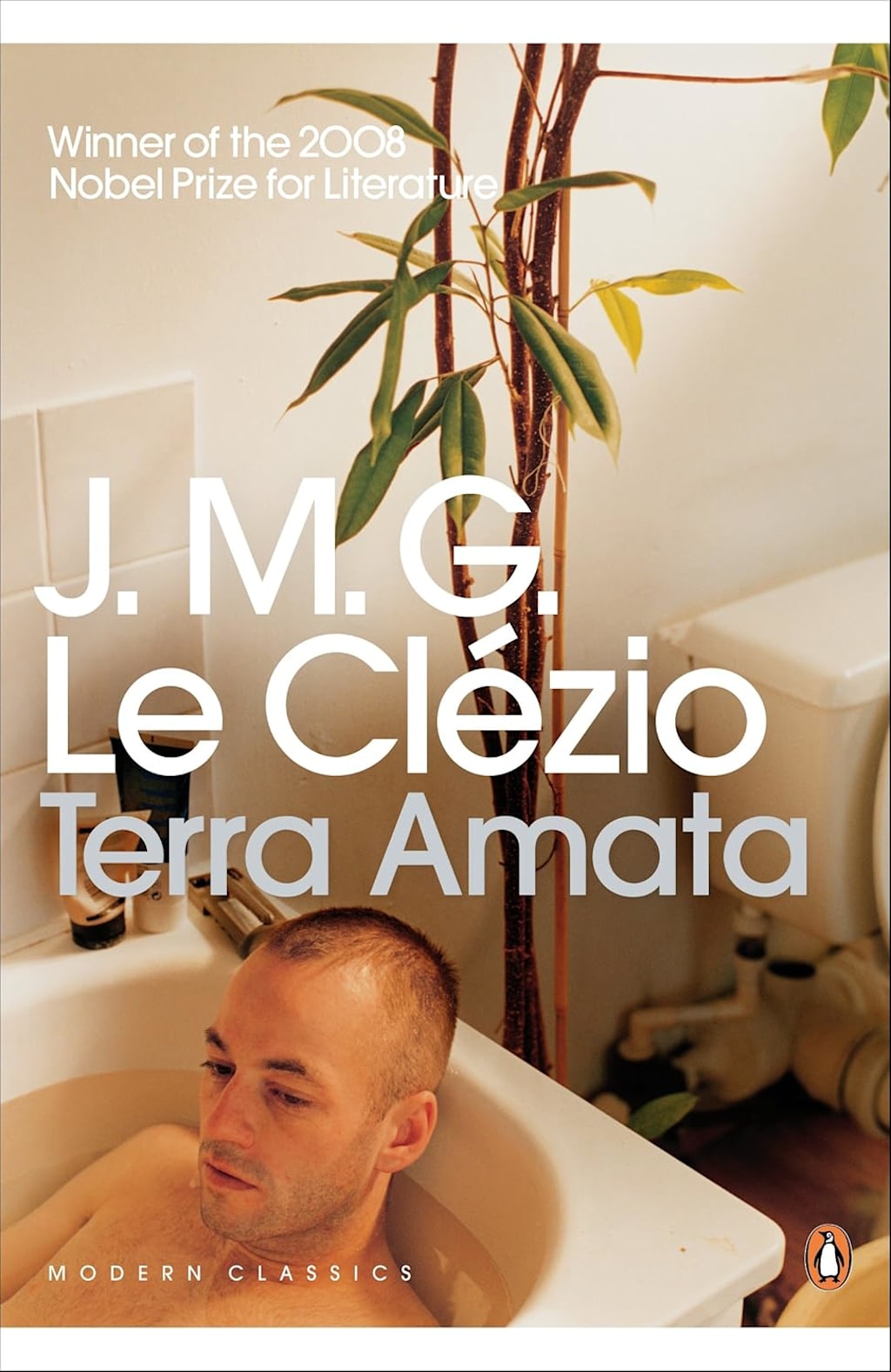
In 1967, J.M.G. Le Clézio published his novel Terra Amata as one of his earlier works. An experimental novel, it is part of this larger phase where the author was working with more surrealist fiction styles, often embracing fragmentations and existentialism as a philosophy of his work. Like a lot of his work though, it explores what it means to be human and how this works in relation to the natural world. It blurs those lines between the real and the cosmic, the existential and the absurdist and the way in which we understand ourselves is shrouded in the 'bigger picture'.
The novel's protagonist serves as this lens in which the author analyses the key details of a mundane life, asking the grand metaphysical questions through the course of the text. Terra Amata is not like other novels in that it doesn't adhere to a plot. Instead, it follows our protagonist's life in a series of vignettes and sensory experiences.
Plot
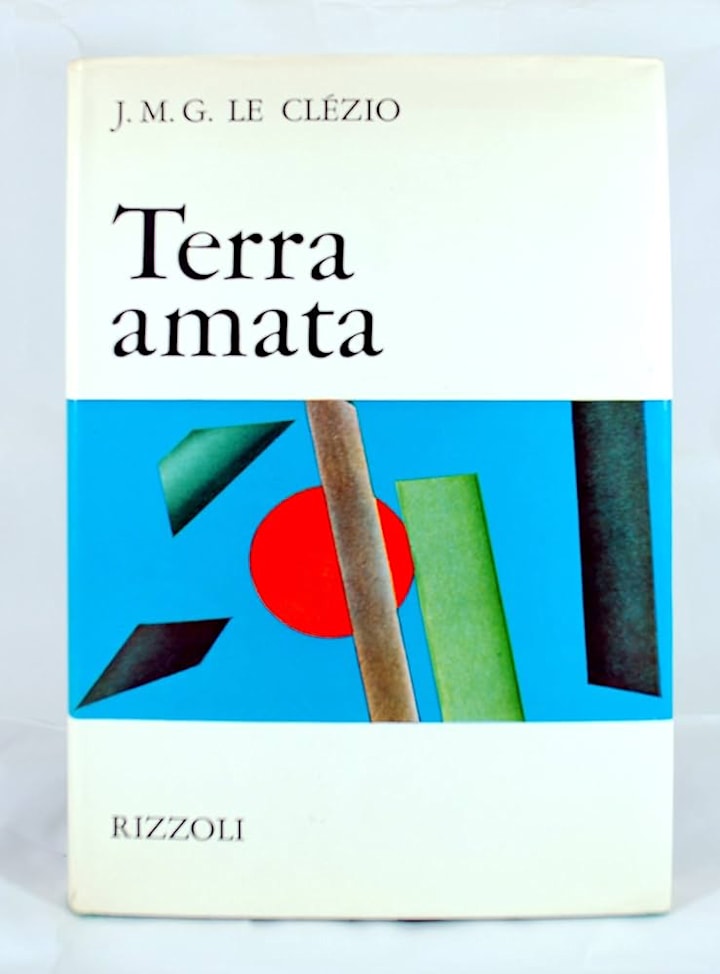
Rather than presenting a traditional plot, Terra Amata traces the life of Chancelade from birth to death, but in a fragmented, episodic manner. The novel opens with his birth, an event described not in sentimental or romanticised terms but as an almost accidental biological process within the vast movement of time. The narrative then follows Chancelade through his childhood, his awakening to the physical world, and his intense sensory experiences of nature.
As a boy, Chancelade discovers the textures of life: heat, sand, the sound of the wind, the way sunlight refracts through glass. The novel lingers on these moments, making them more significant than conventional milestones like education or social achievements. He plays in the dirt, he observes insects, he feels the fire of the sun on his skin, and he contemplates the mysteries of existence.
As he grows, Chancelade encounters love and sexual awakening, though these experiences are described in visceral, sometimes unsettling terms. Relationships are fleeting, filled with longing and physicality but also an acute awareness of mortality. Love, like life, is transient.
Later, the novel follows Chancelade into adulthood, where he experiences violence, destruction, and the relentless passage of time. The final sections confront his death; not as a tragic or heroic event but as an inevitable conclusion, as insignificant in the grand scope of the universe as his birth.
Throughout the text, there is no overarching conflict, no resolution; there is only the experience of being alive in a world that will continue long after the individual has vanished.
Into the Book
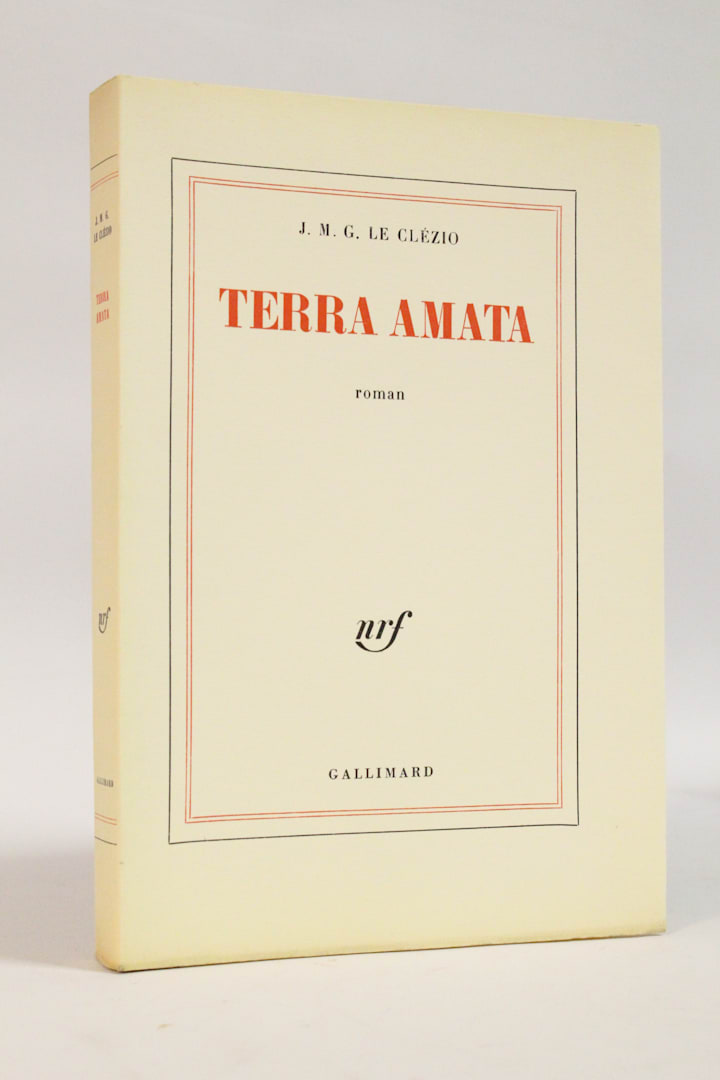
The Impermanence of Life:
A huge theme in Terra Amata is the impermanence of life. Chancelade’s story is not one of triumph or tragedy but of simple existence, defined by sensory experiences rather than grand achievements. Le Clézio presents life as something both intensely vivid and ultimately inconsequential in the grand scale of the universe.
Yet, rather than being a nihilistic statement, this idea serves to heighten the beauty of the present moment. If life is fleeting, then every sensation: the heat of the sun, the taste of fruit, the touch of another person, becomes profoundly meaningful.
“You are nothing. You are only a brief flame that will be extinguished without leaving a trace.”
- Terra Amata by J.M.G. Le Clézio
Sensory Details:
The writing is deeply rooted in sensory detail, making the physical experience of the world more important than abstract thought. Chancelade does not contemplate his place in society as much as he experiences the rawness of existence: the textures, sounds, and movements of the natural world.
The novel suggests that understanding life does not come from intellectual reflection but from fully immersing oneself in experience. This emphasis on sensory perception aligns with Le Clézio’s broader literary style, which often highlights the connection between humanity and the natural world.
“The earth was hot beneath his feet, pulsing with a life of its own. He felt the dust in his mouth, the sweat on his back, and in that moment, he was entirely alive.”
- Terra Amata by J.M.G. Le Clézio
Violence and Destruction:
While the novel looks primarily at the intensity of life, it does not shy away from violence and destruction. Chancelade witnesses both human cruelty and the indifferent force of nature. These moments are not framed as moral struggles but as inherent aspects of existence.
The novel suggests that violence is not an aberration but a fundamental part of existence, one that humans often try to ignore. Whether through war, personal suffering, or the simple reality of decay, destruction is as natural as creation.
“There was no mercy in nature. The wasp tore into the flesh of the caterpillar, indifferent to its suffering. And Chancelade, watching, understood that this too was life.”
- Terra Amata by J.M.G. Le Clézio
Why It's a Masterpiece
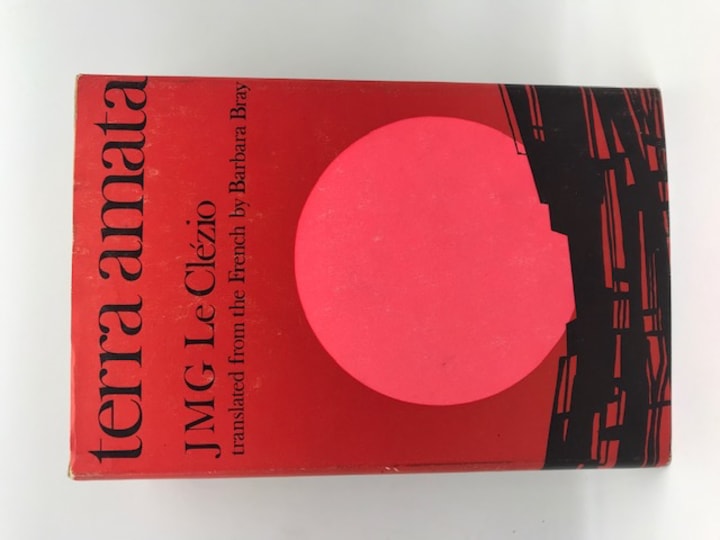
It defies conventional storytelling and that is one of the key reasons so many people love it today. The fragmented structure, the sensory experiences and the lack of main conflict hearkens back to the Modernist era. It strips away everything that makes a traditional narrative and thus, we get to engage with what is a very human experience - almost universally so. The novel's engagement with philosophy tends to set itself firmly amongst the works of Jean-Paul Sartre and Albert Camus. It doesn't dwell on despair nor does it provide unrelenting acceptance of the future. It is simply a series of events and nothing more. The fleeting nature of life is presented as something that will happen anyway, regardless of whether we accept it or not.
Conclusion
This is a truly one-of-a-kind novel and I hope you find time to read it. There are so many beautiful and philosophical things to discover within and the author definitely teaches us something about the acceptance of events in life: we don't really matter all that much. It is both disturbing and strangely comforting.
Next Week: Anna Karenina by Leo Tolstoy
About the Creator
Annie Kapur
I am:
🙋🏽♀️ Annie
📚 Avid Reader
📝 Reviewer and Commentator
🎓 Post-Grad Millennial (M.A)
***
I have:
📖 300K+ reads on Vocal
🫶🏼 Love for reading & research
🦋/X @AnnieWithBooks
***
🏡 UK
Keep reading
More stories from Annie Kapur and writers in Geeks and other communities.
Book Review: "Henry VIII: King and Court" by Alison Weir (Pt.1)
Popular culture has perpetuated some mythologies regarding Henry VIII, Alison Weir makes it clear that she'll address these issues but probably not entertain them. One of the myths is that Henry VIII didn't wash and thus smelt bad, in fact Weir puts to us that the King was obsessed with his hygeine. He also almost never dined in the main hall with others, which challenges many notions and amateur YouTube videos that claim the King was definitely not a great dinner guest in the main dining hall. We learn that on many instances, he preferred to dine with his wife, or by himself - a King that was more introspective than we have been led to believe does not necessarily mean he was not a complete and utter sociopath.
By Annie Kapurabout 6 hours ago in Geeks
Simpsons Review: "So It's Come to This: A Simpsons Clip Show"
Happy April Fools' Day, all! It's been a while since I've written a review of a Simpsons episode, and with today being the aforementioned holiday, I just have to talk about this episode. It's a landmark episode, in more ways than one, so let's get to it.
By Clyde E. Dawkins3 days ago in Geeks
Voices of Hope to Raise "Curtains" at North Shore Music Theatre
Because I say, the show must go on! Voices of Hope (VOH) is performing “Curtains,” a lively and comical musical mystery with lyrics by Kander and Ebb. Set in 1959 Boston, Lieutenant Frank Cioffi, a theater-loving cop, solves the murder of the leading lady on the opening night of a new musical.
By Marielle Sabbag3 days ago in Geeks


Comments
There are no comments for this story
Be the first to respond and start the conversation.