
How Ali Khamenei Rose to Power and the Impact of His Rule on Iran
The rise of Ali Khamenei

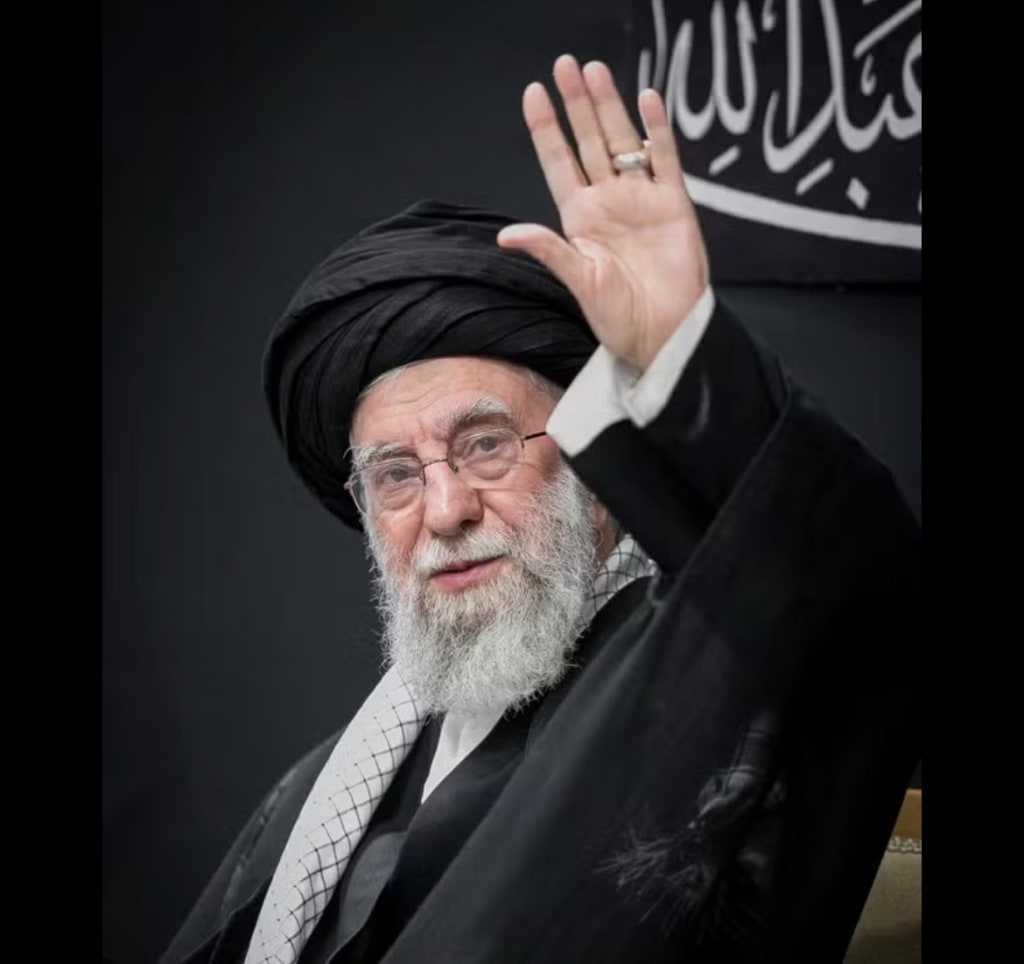
The rise of Ali Khamenei to power is deeply tied to one of the most important turning points in modern Middle Eastern history: the Iranian Revolution. His leadership, which lasted from 1989 until his death in 2026, shaped Iran’s political system, society, and international relations for nearly four decades. While supporters viewed him as a defender of Iran’s sovereignty and Islamic identity, critics argue that his rule brought repression, economic hardship, and widespread human rights abuses.
Early Political Rise
Ali Khamenei was born in 1939 in Mashhad, Iran, into a religious family. As a young cleric, he became involved in opposition movements against the Shah of Iran, aligning himself with revolutionary leader Ruhollah Khomeini. When the Iranian Revolution overthrew the monarchy in 1979, Khamenei quickly rose within the new Islamic Republic.
In the early years after the revolution, Iran was marked by instability, war, and political purges. Khamenei became a trusted figure within the new regime and held several important roles. By 1981, he was elected President of Iran, a position he held until 1989. During this period, the country was engaged in the devastating Iran-Iraq War, which further centralized power in the hands of revolutionary leaders.
Although the presidency was important, the real power in Iran rested with the Supreme Leader. When Ayatollah Khomeini died in 1989, the country faced a critical moment: choosing his successor.
Becoming Supreme Leader
Khamenei’s rise to Supreme Leader was not inevitable. At the time, he was not considered one of the most senior religious authorities, which traditionally was a requirement for the role. However, due to political maneuvering and support from key figures within the regime, he was appointed as Supreme Leader.
This decision marked the beginning of a new phase in Iran’s political system. As Supreme Leader, Khamenei held ultimate authority over the military, judiciary, media, and key political institutions. 
Over time, he consolidated power further, strengthening institutions loyal to him, especially the Islamic Revolutionary Guard Corps (IRGC).  These forces became central not only to national defense but also to internal security and economic activities.
Consolidation of Absolute Power
Once in power, Khamenei worked to eliminate rivals and ensure that opposition voices were marginalized. He sidelined reformist politicians, controlled elections through vetting processes, and tightened control over media and public discourse.
His leadership style has often been described as authoritarian. Decisions of national importance ultimately rested with him, and his authority extended across nearly all aspects of governance. Over time, this concentration of power led to a system where dissent was increasingly difficult and dangerous.
Under Khamenei, institutions such as the judiciary and security forces became tools for maintaining control. Arrests of journalists, activists, and political opponents became common, contributing to a climate of fear.
Crackdowns on Protests
One of the most criticized aspects of Khamenei’s rule was the repeated suppression of public protests. Over the decades, Iran experienced multiple waves of unrest—in 1999, 2009, 2019, 2022, and 2025–2026.
During these protests, security forces were often deployed to restore order, sometimes using lethal force. Reports indicate that live ammunition, mass arrests, and internet shutdowns were used to control demonstrations. 
The 2022 protests, sparked by the death of a young woman in police custody, became one of the most significant challenges to the regime. Demonstrations spread across the country, involving people from different backgrounds and age groups. The government responded with force, leading to hundreds of deaths and thousands of arrests. 
Similar patterns were observed in later protests, particularly during the economic crisis of 2025–2026. These events reinforced the perception among critics that the government prioritized control over dialogue.
Human Rights Concerns
Human rights organizations have long raised concerns about conditions in Iran under Khamenei’s leadership. These concerns include restrictions on freedom of speech, limitations on political participation, and the use of harsh punishments.
The death penalty has been widely used, and judicial processes have often been criticized for lacking transparency and fairness. Additionally, reports have documented cases of torture, arbitrary detention, and forced confessions.
Religious minorities, such as the Baha’i community, faced systemic discrimination, including restrictions on education, employment, and property ownership. 
Women’s rights were also a major point of contention. Strict laws regarding dress codes and behavior were enforced by morality police. In later years, enforcement became more technologically advanced, involving surveillance tools and reporting systems. 
Economic Struggles and Sanctions
Khamenei’s foreign policy played a significant role in shaping Iran’s economy. His stance toward Western countries, particularly the United States, contributed to decades of sanctions.
These sanctions targeted Iran’s oil exports, banking system, and international trade. As a result, the Iranian economy faced persistent challenges, including inflation, unemployment, and currency devaluation.
While the government attempted to negotiate agreements, such as the 2015 nuclear deal, tensions remained high. The collapse of that agreement led to renewed sanctions, further worsening economic conditions. 
For ordinary Iranians, these economic difficulties translated into rising living costs and reduced opportunities. Many citizens expressed frustration over corruption and inequality, which fueled further protests.
Regional Influence and Military Strategy
Another defining aspect of Khamenei’s leadership was Iran’s involvement in regional conflicts. Under his guidance, Iran supported various groups and allies across the Middle East, expanding its influence in countries such as Syria, Iraq, and Lebanon.
Supporters argued that this strategy strengthened Iran’s position and protected it from external threats. Critics, however, claimed that it diverted resources away from domestic needs and contributed to instability in the region.
This foreign policy approach also increased tensions with countries like Israel, Saudi Arabia, and the United States, leading to periodic confrontations and the risk of broader conflict.
Control Over Society
Beyond politics and economics, Khamenei’s rule affected everyday life in Iran. Cultural and social policies were tightly regulated, with restrictions on media, art, and public expression.
The government maintained control over television, radio, and much of the internet. While digital platforms created new spaces for communication, authorities often imposed restrictions, especially during times of unrest.
Education and public institutions were also influenced by ideological guidelines, shaping how history, religion, and national identity were presented.
The Final Years and Growing Opposition
In the later years of his rule, Khamenei faced increasing challenges. Economic difficulties, combined with political repression, led to growing dissatisfaction among the population.
Younger generations, in particular, demanded greater freedoms and opportunities. The repeated cycles of protest and crackdown highlighted the deep divide between the government and segments of society.
By the mid-2020s, Iran was facing significant internal and external pressures. International tensions escalated, and domestic unrest continued to grow.
Legacy and Impact
Ali Khamenei’s legacy is complex and deeply contested. To his supporters, he was a leader who preserved Iran’s independence and resisted foreign influence. To his critics, he was an authoritarian ruler whose policies led to repression, economic hardship, and isolation.
What is clear is that his leadership had a profound impact on Iran and the wider region. The system he helped build concentrated power at the top, limited political freedoms, and relied heavily on security forces to maintain control.
At the same time, the resilience of Iranian society—seen in repeated protests and demands for change—demonstrates that the story of Iran is not defined solely by its leadership, but also by its people.
Conclusion
The rise of Ali Khamenei from a revolutionary cleric to the Supreme Leader of Iran illustrates how political power can be shaped by historical events, alliances, and institutional structures. His decades in power transformed Iran into a state where authority was highly centralized and dissent was tightly controlled.
While his leadership ensured continuity of the Islamic Republic, it also came at a cost for many citizens, particularly in terms of political freedoms and economic stability.
Understanding his rule is essential for understanding modern Iran—a country marked by both strong state control and persistent demands for change.
About the Creator
Keep reading
More stories from Sorea Cata and writers in History and other communities.
What Is Happening in the World Today: A Deep Look at Major Global Events in 2026
The world in 2026 is experiencing a period of intense transformation, marked by geopolitical tensions, economic uncertainty, technological progress, and shifting global alliances. From escalating conflicts in the Middle East to the rapid development of artificial intelligence, today’s global landscape reflects both instability and innovation. Understanding these major events helps us make sense of the complex and interconnected reality we live in.
By Sorea Cataabout 7 hours ago in History
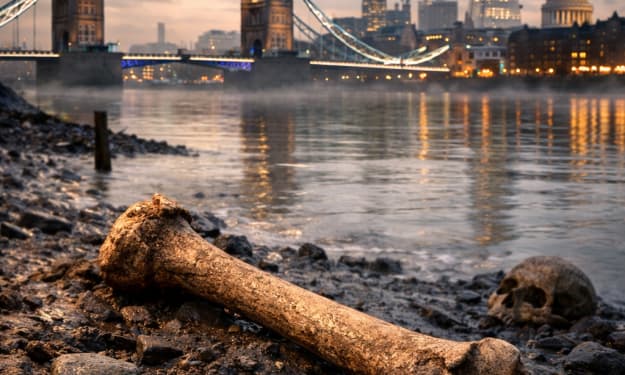
Ancient Secrets Beneath the Thames: 5,000-Year-Old Human Bone Discovered in London
The muddy banks of the River Thames in London have long been known as a treasure trove of history, yielding countless artifacts from different eras. Recently, archaeologists and researchers were astonished by the discovery of a human bone believed to be around 5,000 years old, dating back to prehistoric Britain. This remarkable find sheds new light on the ancient communities that once lived along the river and raises intriguing questions about their rituals, lifestyles, and relationship with the Thames.
By Irshad Abbasi 4 days ago in History
4,400‑Year‑Old Priest’s Tomb Unearthed in Saqqara
Archaeologists in Egypt have made a remarkable discovery that is captivating historians and Egyptologists around the world: an exceptionally well‑preserved tomb belonging to an ancient priest that dates back approximately 4,400 years. The burial site, found in the vast necropolis of Saqqara just south of Cairo, reveals extraordinary insights into the life and religious beliefs of a high‑ranking official during Egypt’s Old Kingdom period.
By Irshad Abbasi a day ago in History
The Forsyth House Fire
Since 1851, Forsyth House has stood on the corner of Union Street and Gordon Street in the heart of Glasgow. Its iconic, or was... because on Sunday 8th of March, 2026, a fire broke out in a small, seemingly un-named shop in the building and tore all that history down. As I write, the rubble is still unsettled and the street is still blocked off. Central Station is quiet on the upper level, and around 30 small businesses have quite literally gone up in smoke.
By S. A. Crawford5 days ago in The Swamp



Comments
There are no comments for this story
Be the first to respond and start the conversation.