
The Crusades
The Siege of Jerusalem's Blood-Soaked Streets


On July 15, 1099, after five weeks of siege, Christian Crusaders breached the walls of Jerusalem and embarked on a massacre so extreme that eyewitnesses reported riding horses through streets where blood reached the stirrups, slaughtering every Muslim and Jewish resident they could find regardless of age or gender, and one chronicler recorded that the killers then washed the blood from their hands and walked barefoot to the Church of the Holy Sepulchre to pray and give thanks to God for their victory, seeing no contradiction between worship and genocide.
The First Crusade, launched in 1095 by Pope Urban II's call for Christian warriors to recapture the Holy Land from Muslim control, had taken four years of brutal campaigning to reach its ultimate objective of Jerusalem, and the army that arrived at the walls of the holy city in June 1099 was a fraction of the force that had departed Europe, reduced by battle casualties, disease, desertion, and the attrition of years of marching and fighting through hostile territory, but the remaining Crusaders were the hardest and most fanatical survivors of a journey that had tested every physical and psychological limit, and they believed with absolute certainty that God had called them to this place for this purpose, and that whatever they did in service of recapturing Christ's city from the infidels was sanctified by divine authority. The garrison defending Jerusalem was relatively small, consisting of approximately one thousand Fatimid Egyptian troops supplemented by militia from the city's Muslim population, and the defensive preparations included poisoning wells outside the walls, removing anything that could be used for siege equipment, and expelling the Christian population of the city to prevent them from acting as a fifth column, though they allowed the Jewish community to remain, a decision that would prove fatal for the Jews when the Crusaders finally broke through.
The siege lasted five weeks during which the Crusaders suffered terribly from heat, thirst, and disease in the arid landscape around Jerusalem where water was scarce and shade nonexistent, and they initially lacked the timber needed to build siege engines because the area had been stripped of trees, but Genoese ships arriving at the port of Jaffa provided both materials and engineering expertise, and the Crusaders constructed two massive siege towers that were rolled up to the walls while other teams worked on siege ramps and battering rams, and the defenders fought desperately using Greek fire and boiling oil to repel the attackers, and the siege became a test of endurance between defenders who had adequate supplies but limited manpower and attackers who had manpower but were running low on water and food. On the night of July 14, under cover of darkness, the Crusaders launched their final assault, and by mid-morning on July 15 Godfrey of Bouillon's forces had breached the northern wall near the current Damascus Gate, and knights poured through the breach into the city, and what followed was one of the most extreme massacres in the history of warfare, exceeding even the brutal norms of medieval conflict.
The massacre of Jerusalem's inhabitants continued for two days, and contemporary accounts from both Christian and Muslim chroniclers agree that the slaughter was indiscriminate and virtually total within the walls, with Crusaders killing every Muslim they found regardless of whether they resisted or surrendered, and also killing the Jewish community who had taken refuge in their main synagogue which the Crusaders set on fire, burning alive the men, women, and children inside. The chronicler Raymond of Aguilers, himself a Crusader chaplain, recorded with apparent satisfaction that in the Temple area, which Muslims called the Haram al-Sharif and which the Crusaders identified with Solomon's Temple, the blood of slaughtered Muslims reached the knees of horses, and while this may be rhetorical exaggeration, the archaeological and documentary evidence confirms that thousands were killed in this enclosed area where civilians had fled seeking sanctuary, and the scale of killing was recognized as extraordinary even by medieval standards where sacking cities and killing defenders was common.
The most disturbing aspect of the Jerusalem massacre was not the killing itself, which while extreme was not unprecedented in medieval warfare, but rather the religious framework within which the killers understood their actions, because the Crusaders genuinely believed that massacring the inhabitants of Jerusalem was not just permissible but was actively pleasing to God and represented the fulfillment of divine will, and they experienced the slaughter not as moral horror but as spiritual triumph, washing blood from their hands and proceeding directly to worship at the holiest site in Christianity with tears of joy and hymns of praise. This fusion of extreme violence with religious devotion represents one of the most troubling aspects of the Crusading mentality and of religious warfare generally, where the dehumanization of enemies required by warfare is reinforced by theological certainty that the enemy is not just politically or militarily opposed but is spiritually opposed to God's plan and therefore deserving of destruction, and this framework removes the normal psychological barriers to killing by reframing murder as divine service.
The aftermath of the massacre saw the Crusaders establish the Kingdom of Jerusalem, a Latin Christian state that would survive in various forms for nearly two centuries before being finally destroyed by Muslim forces under Saladin and his successors, and the memory of the 1099 massacre profoundly shaped Muslim attitudes toward the Crusaders and toward Western Christianity for centuries afterward, creating a legacy of bitterness and desire for revenge that motivated subsequent Muslim military campaigns and that continues to influence the relationship between the Islamic world and the West to this day, with modern extremists on both sides invoking the Crusades as justification for continued conflict. Saladin's recapture of Jerusalem in 1187 was notably more merciful than the Crusader conquest had been, with Saladin allowing the Christian population to ransom themselves and leave the city alive, a deliberate contrast to the 1099 massacre that served both to demonstrate Muslim moral superiority and to win strategic advantage by encouraging future enemies to surrender rather than fight to the death.
The siege of Jerusalem in 1099 raises fundamental questions about the relationship between religious faith and violence, about how ordinary people can be convinced to commit atrocities through ideological framing that transforms murder into sacred duty, and about the long-term consequences of extreme violence that creates cycles of vengeance lasting centuries. The Crusaders who waded through blood and then prayed in the Holy Sepulchre were not monsters but rather products of a cultural and religious system that taught them their enemies were subhuman enemies of God whose killing was meritorious, and understanding how such systems operate and how they transform ordinary individuals into willing participants in genocide remains relevant in a world where religious and ideological violence continues to plague human civilization, and where the same mechanisms of dehumanization and divine sanction that motivated the 1099 massacre continue to be deployed by extremists of various faiths and political movements to justify violence against those they define as other.
About the Creator
The Curious Writer
I’m a storyteller at heart, exploring the world one story at a time. From personal finance tips and side hustle ideas to chilling real-life horror and heartwarming romance, I write about the moments that make life unforgettable.
Keep reading
More stories from The Curious Writer and writers in History and other communities.
The Peloponnesian War
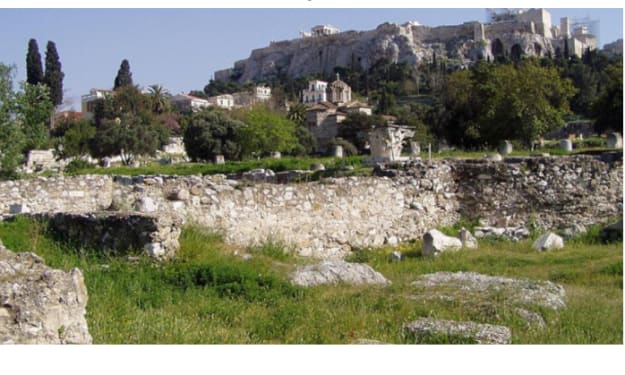
In 430 BCE, the golden age of Athens ended not with a military defeat but with a mysterious plague that killed a quarter of the population including the great statesman Pericles, turning the world's most advanced civilization into a city of corpses stacked in temples and burning in the streets while survivors abandoned morality and law because they believed they were all going to die anyway, and the description by historian Thucydides remains so detailed that modern epidemiologists are still trying to identify what disease destroyed Athens from within while Sparta waited patiently outside the walls.
By The Curious Writerabout 13 hours ago in History
Where Did Democracy Originate? Not Greece's Claims Analysis
The long-held notion that democratic administration originated only in the classical Mediterranean world of Greece and Rome has been called into question by a recent study. Researchers have found that shared, inclusive government was significantly more prevalent and extensive than previously believed by examining historical and archeological data from 31 ancient communities in Europe, Asia, and the Americas.
By Francis Dami6 days ago in History
The Lost Glory of Muslim Spain
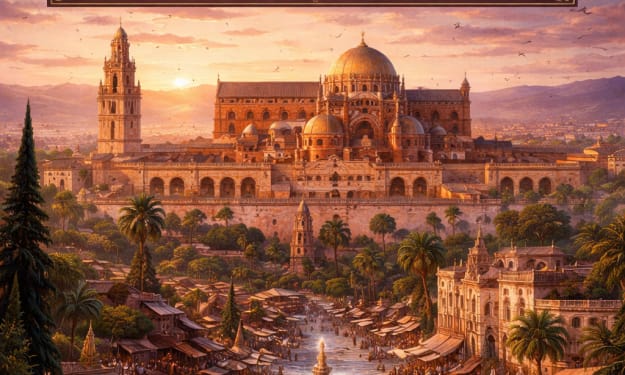
In the rich tapestry of Islamic history, few cities shine as brightly as Córdoba during the time of the Caliphate of Córdoba. Though the caliphate itself lasted for only about seventy years (929–1031 CE), its legacy left a lasting imprint on Europe and the Muslim world alike. It was a period marked by intellectual brilliance, architectural grandeur, and remarkable coexistence.
By Irshad Abbasi 7 days ago in History


Comments
There are no comments for this story
Be the first to respond and start the conversation.