
Saudi Arabia’s E-commerce Apparel Market Set to Double by 2034 Amid Digital Boom
Rising smartphone penetration, youth-driven fashion demand, and Vision 2030 reforms propel online apparel sales across the Kingdom

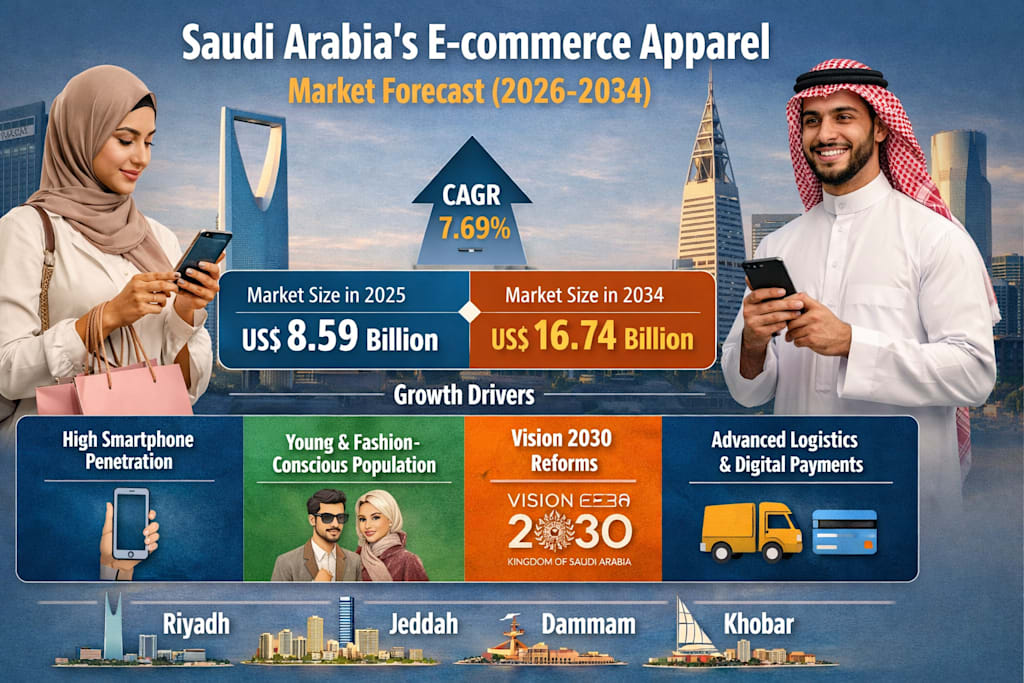
Saudi Arabia’s retail landscape is undergoing a powerful transformation, with e-commerce apparel emerging as one of the fastest-growing segments. According to insights from Renub Research, the Saudi Arabian e-commerce apparel market is projected to grow from US$ 8.59 billion in 2025 to US$ 16.74 billion by 2034, registering a CAGR of 7.69% between 2026 and 2034.
This rapid expansion is not just about numbers—it reflects a broader shift in consumer behavior, digital infrastructure, and cultural openness to global fashion trends. As the Kingdom accelerates toward its Vision 2030 goals, online apparel retail is becoming a defining pillar of its digital economy.
A New Era of Fashion Consumption
E-commerce apparel includes clothing, footwear, and accessories sold through online platforms such as brand websites, mobile apps, and marketplaces. From modest wear and luxury fashion to sportswear and fast fashion, the online ecosystem offers a wide spectrum of products tailored to diverse consumer needs.
What makes Saudi Arabia unique is how quickly consumers have embraced digital fashion retail. The convenience of browsing collections, comparing prices, and ordering from home has fundamentally reshaped shopping habits. Features like virtual try-ons, personalized recommendations, and flexible return policies have further strengthened customer confidence in online shopping.
In a country where lifestyle modernization is happening at an unprecedented pace, fashion has become both a personal statement and a digital experience.
Digital Adoption Fuels Market Expansion
One of the most significant growth drivers is Saudi Arabia’s exceptionally high level of digital connectivity. With more than 98% of the population online, the Kingdom boasts one of the highest smartphone penetration rates globally.
Mobile devices have become the primary shopping channel, especially among younger consumers and working professionals. Social media platforms play a critical role in influencing purchasing decisions, with influencers, targeted ads, and digital campaigns shaping fashion trends in real time.
AI-powered tools—such as size guides, product recommendations, and secure payment systems—have made online shopping more intuitive and personalized. Consumers increasingly prefer the ease of mobile commerce over traditional brick-and-mortar experiences, signaling a long-term structural shift in retail.
Youth Culture and Global Fashion Influence
Saudi Arabia’s youthful population is a major catalyst behind the growth of e-commerce apparel. With a strong appetite for global fashion trends, consumers are actively seeking access to international brands, luxury labels, and emerging designers.
E-commerce platforms eliminate geographical barriers, allowing shoppers to explore global collections without leaving their homes. This has fueled demand for categories such as athleisure, streetwear, modest fashion, and seasonal collections.
Events like the Saudi Fashiontex Expo highlight the Kingdom’s ambition to position itself as a regional hub for fashion and textiles. These initiatives not only attract international investment but also nurture local talent, contributing to a vibrant and evolving fashion ecosystem.
Online-exclusive launches, influencer collaborations, and limited-edition drops further drive consumer engagement, often leading to impulse purchases and brand loyalty.
Vision 2030: A Strong Foundation for Growth
Saudi Arabia’s Vision 2030 initiative has laid the groundwork for a thriving e-commerce sector. Investments in digital infrastructure, logistics, and regulatory reforms have significantly improved the ease of doing business online.
The expansion of warehousing facilities, smart fulfillment centers, and last-mile delivery services has enhanced operational efficiency. Faster delivery times and improved logistics networks have increased customer satisfaction, making online shopping more reliable.
Government support for small and medium-sized enterprises (SMEs) has also encouraged local fashion brands to enter the digital marketplace. Simplified licensing procedures and cross-border trade facilitation have made it easier for both domestic and international players to operate in Saudi Arabia.
The logistics sector alone contributed approximately 6% to the national GDP in 2022 and is expected to reach 10% by 2030, underscoring its importance in supporting e-commerce growth.
Challenges: Returns, Competition, and Trust
Despite its promising outlook, the Saudi e-commerce apparel market faces several challenges.
High Return Rates and Fit Issues
One of the biggest hurdles is the high rate of product returns, primarily due to size mismatches and quality expectations. Unlike physical stores, customers cannot try garments before purchasing, leading to dissatisfaction in some cases.
Handling returns involves additional logistics costs, including pick-up, inspection, and restocking. These processes strain supply chains and impact profit margins.
Intense Market Competition
The market is highly competitive, with local platforms, global marketplaces, and brand-owned websites all vying for consumer attention. Frequent discounts, flash sales, and aggressive marketing campaigns have made price sensitivity a defining feature of the market.
Customer loyalty remains fragile, as consumers often switch platforms based on deals and promotions.
Trust and Quality Concerns
New and smaller sellers face challenges in building trust due to concerns about counterfeit products, delayed deliveries, and inconsistent quality. Establishing credibility requires consistent service, transparent product descriptions, and secure payment systems.
Beyond Apparel: A Broader E-commerce Ecosystem
The growth of online apparel is closely linked to the expansion of other e-commerce segments in Saudi Arabia.
Cosmetics
The e-commerce cosmetics market is thriving, driven by influencer culture and demand for premium and halal-certified products. Consumers rely heavily on reviews and video content when making purchasing decisions.
Groceries
Online grocery shopping has become a staple in urban households, supported by quick-commerce platforms and same-day delivery services.
Home Appliances
Consumers are increasingly purchasing high-value items like refrigerators and smart devices online, attracted by price transparency and home delivery services.
These interconnected segments reinforce the overall growth of Saudi Arabia’s digital retail ecosystem.
B2C Leads, B2B Gains Momentum
The Business-to-Consumer (B2C) segment dominates the e-commerce apparel market, accounting for the majority of online sales. Mobile apps, personalized recommendations, and loyalty programs have made B2C platforms highly attractive to consumers.
At the same time, the Business-to-Business (B2B) segment is gaining traction. Companies are increasingly using online platforms for bulk purchases of uniforms, workwear, and promotional clothing. Digital procurement systems and negotiated pricing models are driving efficiency in this segment.
Regional Insights: Key Cities Driving Growth
Riyadh
As the capital city, Riyadh leads the market with high purchasing power and strong digital adoption. Consumers actively shop for luxury and fast fashion online, supported by efficient logistics and influencer-driven marketing.
Jeddah
Jeddah’s coastal lifestyle and diverse population contribute to demand for casual and international fashion. Its strategic port connectivity enhances logistics efficiency.
Dammam
The city’s industrial workforce and growing digital awareness are driving steady growth in online apparel purchases, particularly for everyday and workwear clothing.
Khobar
Known for its affluent population, Khobar shows strong demand for premium and imported fashion brands. High smartphone usage and proximity to Bahrain influence consumer preferences.
Competitive Landscape
Major global and regional players dominate the Saudi e-commerce apparel market, including platforms like Alibaba, Amazon, ASOS, and Walmart. These companies leverage advanced logistics, extensive product catalogs, and strong brand recognition to maintain their market positions.
However, local platforms and emerging startups are also carving out niches by focusing on cultural relevance, modest fashion, and personalized customer experiences.
Final Thoughts
Saudi Arabia’s e-commerce apparel market is more than just a growth story—it is a reflection of a nation embracing digital transformation at scale. With strong government backing, a young and tech-savvy population, and increasing global integration, the sector is poised for sustained expansion.
While challenges such as returns management and intense competition persist, innovation in technology, logistics, and customer experience will likely address these issues over time.
As the Kingdom continues its journey toward Vision 2030, the e-commerce apparel sector stands as a testament to how tradition and modernity can seamlessly coexist—delivering both economic value and a redefined consumer experience.
About the Creator
Gallagher share price Alert: Key Insights for UK Investors Today
The Gallagher share price has recently seen notable movement, drawing the attention of investors across the UK. Sudden shifts in share price can affect both short-term and long-term investment strategies, making it important to understand what is driving these changes. They will examine the reasons behind the current Gallagher share price movement, how it impacts portfolios, and practical steps investors can take to stay ahead.
By John.doe7984 days ago in Trader
Australia Health Insurance Market 2026: Digital Healthcare, Personalized Plans & Rising Coverage Demand
Australia Health Insurance Market Overview The Australia health insurance market is a vital component of the country’s healthcare ecosystem, providing financial protection for medical expenses, hospital treatments and preventive care services. The market operates within a dual public-private system, where private insurance complements the national Medicare system by offering faster access and broader coverage options.
By Amyra Singh3 days ago in Trader
Scones
Alright, let's not fuck about - here is what you need: Ingredients: 350g self raising flour 90g butter pinch of salt tsp of baking powder 3 tbsp caster sugar (or just normal white sugar would probably be fine) 175ml milk a squeeze of lemon a drop of vanilla an egg fresh strawberries, if they're in season Extra flour Even more flour Dried fruit (I consider this completely optional and usually leave it out)
By L.C. Schäfer6 days ago in Feast



Comments
There are no comments for this story
Be the first to respond and start the conversation.