
Competitor Analysis Using Web Scraping: A Complete Guide for Retail Leaders
Learn how web scraping enables powerful competitor analysis for retail leaders. Track pricing, products, reviews, and market trends in real time to optimize strategies, improve decision-making, and boost revenue growth in competitive ecommerce markets.

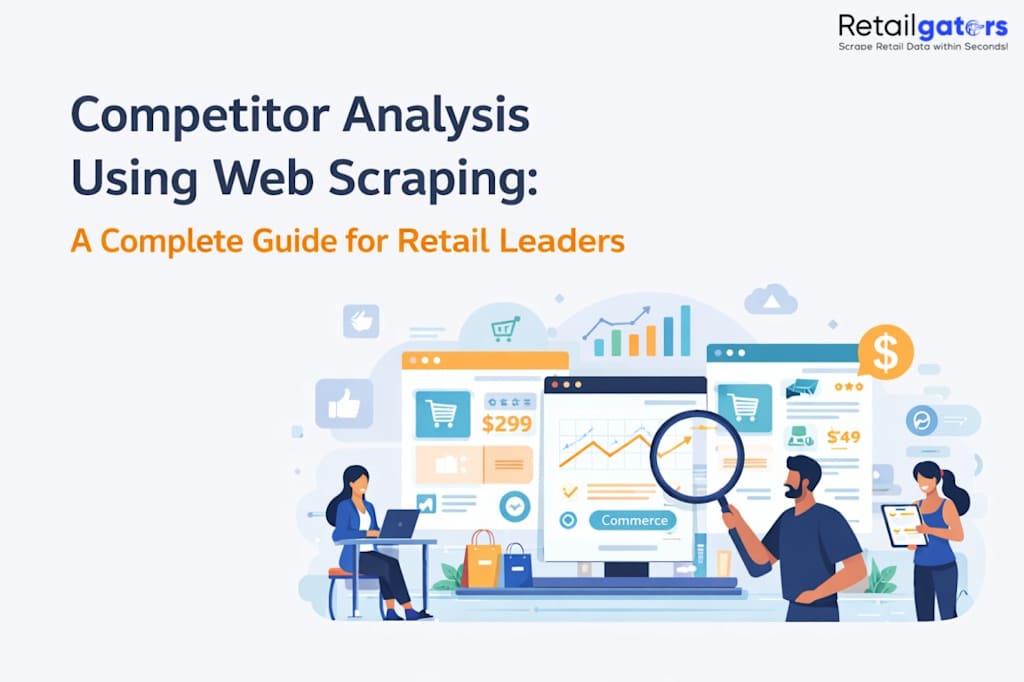
In today’s hyper-competitive retail landscape, guessing what your competitors are doing is no longer enough. Retail leaders need real-time, data-driven insights to stay ahead—and that’s exactly where web scraping for competitor analysis becomes a game-changer.
Whether you're an ecommerce brand, marketplace seller, or enterprise retailer, understanding competitor pricing, product strategies, and market positioning can directly impact your revenue and growth.
Let’s break it down in a practical, no-fluff way.
Why Competitor Analysis Matters More Than Ever
Retail has evolved. Customers compare prices across multiple platforms within seconds. Trends shift overnight. New products emerge constantly.
Without competitor intelligence, you risk:
- Losing customers to better-priced alternatives
- Missing market trends
- Stocking the wrong products
- Making slow or reactive decisions
👉 Simply put:
Data-driven competitor analysis = faster decisions + higher margins
What is Web Scraping in Competitor Analysis?
Web scraping is the process of extracting large amounts of data from websites automatically.
In retail, it helps collect:
- Product prices
- Discounts & promotions
- Product descriptions
- Reviews & ratings
- Availability & stock status
Instead of manually tracking competitors, businesses use automated web scraping tools to gather structured data at scale.
Key Data Points Retailers Should Track
To make competitor analysis truly effective, you need the right data—not just more data.
1. Pricing Data 💰
- Current product prices
- Historical price trends
- Discount frequency
👉 Helps in:
- Dynamic pricing
- Margin optimization
2. Product & Catalog Data 📦
- Product listings
- SKU variations
- Category positioning
👉 Helps in:
- Identifying catalog gaps
- Improving product assortment
3. Reviews & Ratings ⭐
- Customer feedback
- Product strengths & weaknesses
👉 Helps in:
- Product improvement
- Marketing messaging
4. Availability & Stock Data 📊
- In-stock / out-of-stock status
- Delivery timelines
👉 Helps in:
- Demand forecasting
- Inventory planning
How Web Scraping Powers Competitor Analysis
Let’s understand how this works in a real-world scenario.
Step 1: Identify Competitors
Choose key competitors across:
- Marketplaces (Amazon, Walmart)
- Brand websites
- Niche platforms
Step 2: Extract Data Automatically
Use web scraping solutions to collect:
- Daily price updates
- Product listings
- Promotions
Step 3: Structure & Clean Data
Raw data is messy. It needs:
- Cleaning
- Standardization
- Deduplication
Step 4: Analyze & Visualize
Convert data into insights using:
- Dashboards
- Reports
- BI tools
Step 5: Take Action 🚀
Use insights for:
- Pricing adjustments
- Product launches
- Competitive campaigns
Real Business Use Cases
🔥 1. Dynamic Pricing Strategy
Retailers adjust prices based on competitor movements to stay competitive without losing margins.
🔥 2. Assortment Optimization
Identify missing SKUs or trending products competitors are selling.
🔥 3. Promotion Monitoring
Track discounts and offers to plan better campaigns.
🔥 4. Market Entry Strategy
Analyze competitors before launching in a new region or category.
Benefits of Using Web Scraping for Competitor Analysis
✅ Real-time market visibility
✅ Faster decision-making
✅ Improved pricing strategies
✅ Better inventory planning
✅ Strong competitive advantage
Challenges You Should Be Aware Of
While web scraping is powerful, it comes with challenges:
- Website structure changes
- Anti-bot protections
- Data accuracy issues
- Legal compliance considerations
👉 This is why many businesses prefer managed web scraping services instead of building everything in-house.
Why Retail Leaders Prefer Managed Solutions
Instead of handling infrastructure, proxies, and maintenance, companies choose expert partners for:
- Scalable data extraction
- Clean, ready-to-use datasets
- Real-time delivery via APIs
- Integrated dashboards
👉 Result:
More focus on strategy, less on technical complexity
Key Features to Look for in a Web Scraping Partner
If you’re planning to implement competitor analysis, look for:
- Data accuracy & reliability
- Real-time or scheduled scraping
- API or dashboard access
- Custom data solutions
- Compliance with data policies
Key Takeaways
- Unified Competitive Visibility: Track pricing, products, reviews, and availability across competitors in one place.
- Revenue Optimization: Use competitor data to improve pricing, promotions, and product strategy.
- Faster Decisions: Turn raw data into actionable insights with dashboards and analytics tools.
Final Thoughts
Competitor analysis is no longer optional—it’s a necessity for survival in modern retail.
With web scraping, you move from reactive decision-making to proactive strategy. Instead of guessing what competitors are doing, you know it—and act faster.
👉 The brands winning today are not just collecting data.
They are using it to drive smarter, faster, and more profitable decisions.
About the Creator
Keep reading
More stories from Retail Gators and writers in Writers and other communities.
Side Quest Goal Achieved: Placing an Alien Claim
This is a post that has me quite ecstatic. It's funny, I thought it was going to be one of my usual, "Hey, I achieved another one of my goals and checked it off" type deals. And it sort of is. But it sort of isn't. And it's also one of my greatest writing accomplishments of late.
By Stephen Kramer Avitabile7 days ago in Writers
Behind the Iron Gate: Fifteen Years a Guard
My name is Lao Zhou. I spent fifteen years as a supervisory officer in a detention center before retiring this year. Over those fifteen years, I’ve seen every kind of person and heard every kind of story. But there is one thing people on the outside are always speculating about—something TV shows make look mysterious and the internet fills with rumors: how do people in there handle their most basic human needs?
By Water&Well&Page4 days ago in Writers



Comments
There are no comments for this story
Be the first to respond and start the conversation.