Essay
The Art of Writing Without a Safety Net
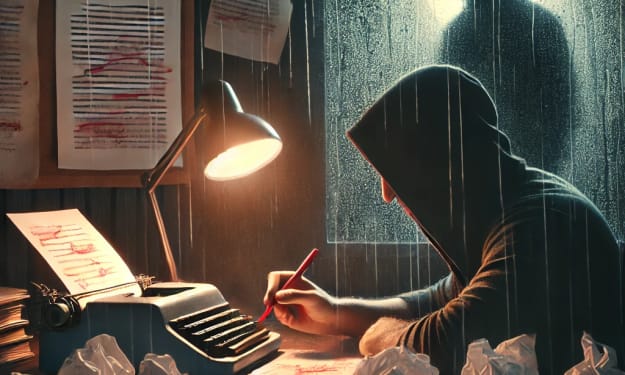
EMBRACING THE CHAOS—WHY PERFECTION IS THE ENEMY Writers crave perfection. We polish sentences until they shine, strip them of flaws, and second-guess every word. But what if that obsession kills creativity? What if the magic hides in the imperfections we try so hard to erase?
By Alain SUPPINIabout a year ago in Critique
Why We’re Exhausted by Reboots, Remakes, Sequels, and Prequels
There’s something powerful about a story that stays with us. The kind of story that lingers in our hearts, shapes the way we see the world, and calls us back to it time and time again. But there’s a difference between honoring a story’s legacy and draining it of all meaning by repeating it over and over again. And right now, we are drowning in repetition.
By Talea Weeanorabout a year ago in Critique
The Psalms
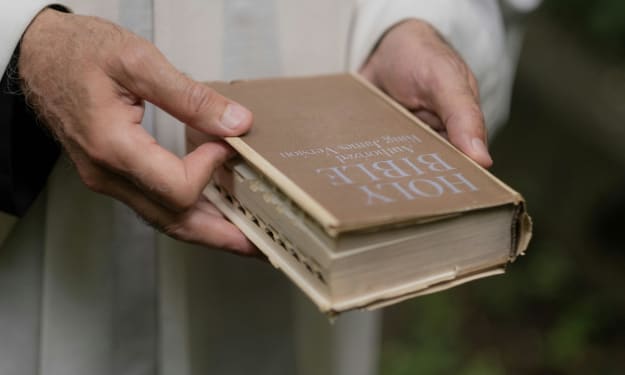
Prophetic words sacred and even secular allowing for learning the more important facets of simply living. Psalms are prayers and poems and even at times turned into songs. There are lessons to be learned by reading these poetic words if given a chance to really understand what they mean and figure out a way to work them into your daily living. Psalms are like pictures written in words of praise. Psalms are the way to accept who you are and show one what is important to live and accept who you are and what you are doing to help yourself.
By Mark Grahamabout a year ago in Critique
Commenting
What makes a good commenter? For me a good commenter is a person who can see beyond the basic ideas of an article or even a book. Commenters can make suggestions on how a story, or an article could be used by the reader. Commenters are a written version of being a listener. We read others' words as listeners hear the other words. Being a commenter is like being a teacher at times in a way for maybe that is why I like commenting on all the articles that I get in my notifications. Commenting gives me a chance as mentioned earlier to learn and make suggestions on others' writings.
By Mark Grahamabout a year ago in Critique
Waiting for a Call....
How many of you out there remember waiting on a certain phone call? Whether it be from a relative, friend, even a neighbor, or as I am today waiting for a call about an online teaching position? Waiting for this certain call when the other person sent an email stating the time and it is already past that time. I know the college that I hope to teach this course is in the Eastern time zone and I am now in the Central time zone, but I waited for the call at 8:30 AM my time which is 9:30 their time and even my 9:30 AM which is actually 10:30 AM their time. (Sorry for the time zone lesson).
By Mark Grahamabout a year ago in Critique
Symbolic Inequality in Social Hierarchy
Every day, hundreds of people visit Batu Paralayang in Malang, gazing at the crowds below from above. This scenery creates a symbol of dominance—those at the top view those below as entertainment, as part of the landscape they observe without truly engaging with. This perspective reflects how positions in society are often perceived as achievements, a pinnacle that distinguishes the "successful" from the "ordinary." However, does this social elevation truly place someone in a higher position, or does it instead make them increasingly isolated?
By Haikal Akmal Ajikonteaabout a year ago in Critique
The Role of Kyai in Building Civil Society
Gus Dur's writings, as summarized by Tempo in "Fighting Through Jokes," make us aware of the crucial position of kyai or religious leaders in the nation's movement. From a sociological-political perspective, civil society plays a vital role in balancing the dominance of the market and the government, which are often the two main forces in modern politics. However, for civil society to develop and have a more significant role, social agents capable of guiding the community in facing various social and political challenges are needed. This is where the role of kyai, as part of the "organic intellectuals" in Antonio Gramsci's terms, becomes highly significant.
By Haikal Akmal Ajikonteaabout a year ago in Critique
No Booz pleaz
No Hockey Night in Canada Those of a certain age may remember the 1999 movie which ushered a cartoon that hit the airwaves in 1997, to the big screen. “South Park”, a firmly ensconced television staple of a particular humor gave birth to the film, “South Park, Bigger, Longer & Uncut”. Its anthemic song, which became wildly popular, is one of the best takes on the Canada/America divide ever to grace the screen. Incisive, satirical, a bit political and downright funny, “Blame Canada” was nominated for ‘Best Original Song’ at the 2000 Oscars. Its lyrics have stood the test of time, moreso than ever now in light of the burgeoning tariff war between America and its northern neighbor. Not only does the song poke fun at both countries, but it thrust the typically reticent Canada definitively into the limelight.
By Marie McGrathabout a year ago in Critique
Internal Recruitment and Human Rights Violations. AI-Generated.
Internal Recruitment and Human Rights Violations Introduction Internal recruitment is a common method used by companies to fill vacant positions by utilizing existing employees. While this method offers several advantages, such as cost and time savings, and increased employee motivation, it's crucial to acknowledge potential problems, particularly those related to human rights (HR) violations. This paper will explore how internal recruitment can potentially violate human rights and its impact on the employees involved.
By Faisal Rachmanabout a year ago in Critique